
Another day of fires in several parts of the country has once again highlighted the weakness of the response to summer wildfires. In Tirana, Kruja and Lura, the situation was reported as problematic, while authorities acknowledged that by Tuesday afternoon there were 10 active fire outbreaks in several counties.
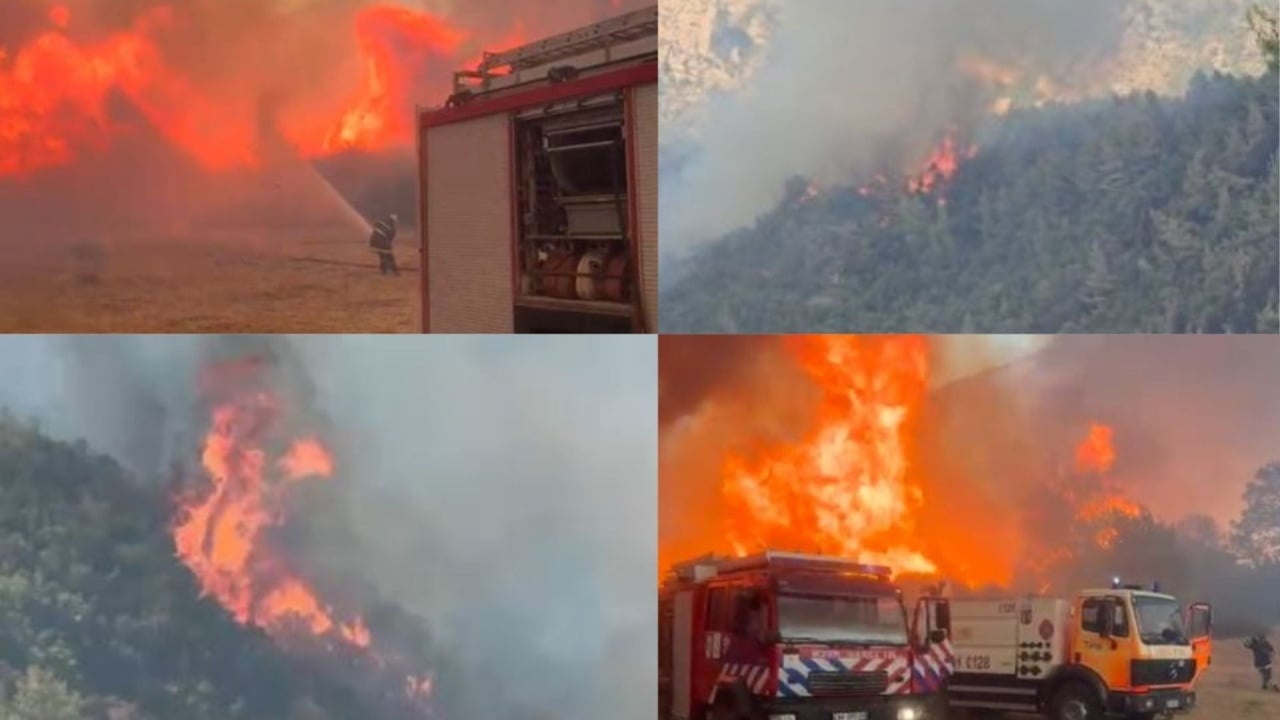
Large fire in Priskë e Madhe, smoke over the area
In the afternoon hours, a large fire engulfed the area of Priskë e Madhe, in the village of Daias in Tirana.
The flames spread quickly, aided by the wind, while smoke covered the area. Firefighting forces intervened on the ground, also supported by a helicopter from the Air Force.
According to the official version, up to that point no problems for homes had been reported, as the affected area was mainly covered with dense vegetation and shrubs. However, the rapid spread of the flames kept the situation tense.
In Kruja, the evacuation of residents is ordered
The situation also worsened in the village of Abazë in Kruja, where the municipality ordered the evacuation of residents.
According to reports from the ground, strong winds were pushing the fire toward inhabited areas, increasing the risk to homes.
Dozens of firefighting personnel and helicopters were engaged in the operation in an effort to stop the advance of the flames.
Lura has continued burning for days
For several days, the fire has remained active in Lura in Dibër, where entire areas have burned.
More than 20 emergency personnel, together with local residents, are working to extinguish the flames and prevent their spread near homes.
The continuation of the fire for so long once again raises questions about the real response capacities on the ground, especially in difficult mountainous areas.
10 active fire outbreaks in six counties
By 5:00 p.m., according to official data, there were 10 active fire outbreaks in the country.
The outbreaks were reported in the counties of Tirana, Fier, Durrës, Gjirokastër, Dibër and Korçë, indicating the broad spread of the emergency across several parts of the country.
The number of active fire outbreaks and the need for aerial intervention in some areas once again put the institutional management of the wildfire season in the spotlight.
For the moment, authorities have made public only partial data on the affected areas and interventions on the ground.
What is clearly visible is that the flames are advancing on several fronts at once, while pressure on local structures and emergency services remains high.