
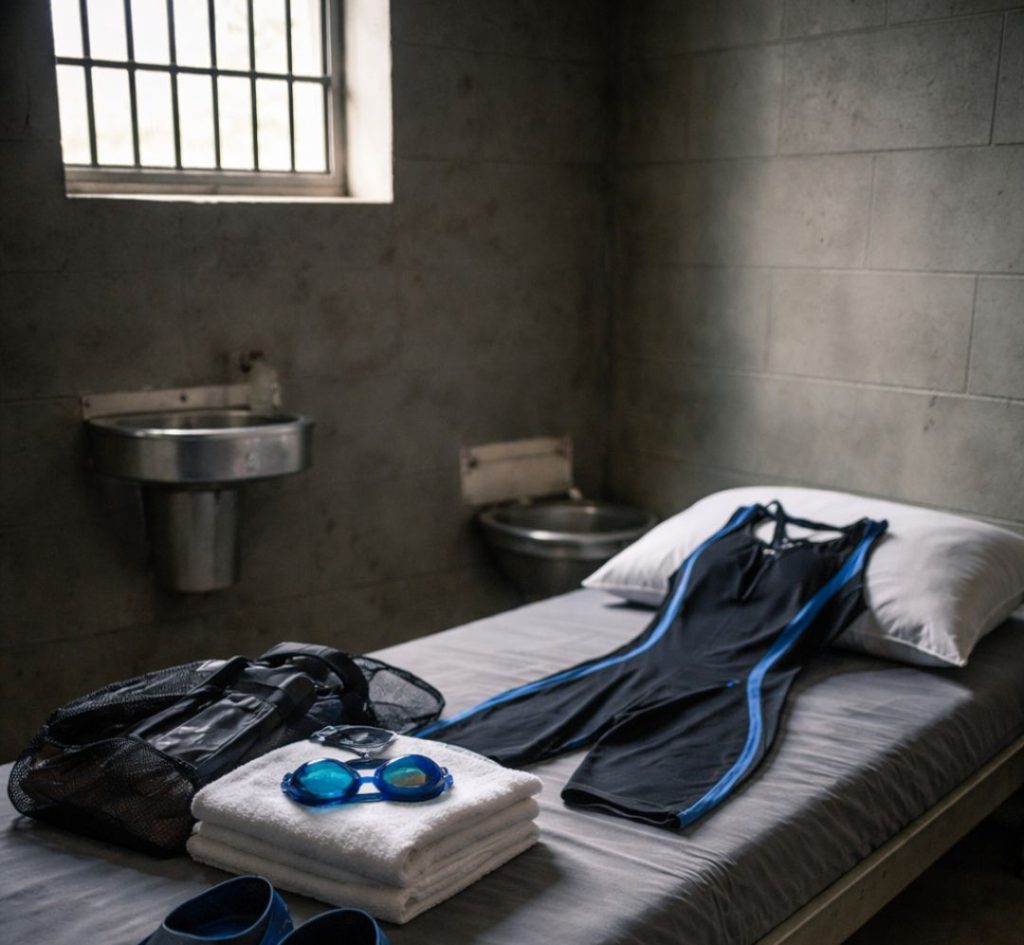
The conviction of former Tirana Sports Club official Deborah Keçi in the 5D case raises a difficult and uncomfortable question for public opinion in Albania: how does a case involving the manipulation of a public procurement procedure end not with real prison time, but with a suspended sentence and probation?
According to the court decision described in the case, Deborah Keçi was found guilty after prosecutors proved that, in her capacity as head of the contracting authority, she had coordinated with the representative of an economic operator in order to pre-determine the winner of a procurement procedure even before the process was officially announced. In plain terms, the competition was allegedly tainted before it even began.
Yet despite the gravity of that conduct, the final outcome was remarkably mild.
A Guilty Verdict, But No Real Jail
Deborah Keçi was sentenced to one year in prison, reduced to eight months due to summary trial. In the end, even that sentence was suspended and converted into 16 months of probation. She was also barred from holding public office for five years.
The other defendants, Teuta Guri, Renaldo Gjerasi and Jetjon Mera, were sentenced to nine months in prison, but their punishment too was suspended and converted into 60 hours of unpaid public work, to be completed within six months.
For many citizens, this is exactly where the scandal deepens.
Because when a court recognizes that public procurement rules were violated, that a winner was effectively arranged in advance, and that the evaluation process was not carried out according to law, the expectation is that the punishment should reflect the seriousness of the abuse. Instead, what the public sees is a familiar Albanian pattern: guilt established on paper, but consequences softened in practice.
The Core Of The Case
The prosecution’s findings, as described in the case summary, are serious.
The allegation was not merely a technical error or bureaucratic negligence. The court found that the procedure had been influenced from the preparation stage, before it was publicly opened, in order to favor a specific company. That moves the case out of the territory of procedural sloppiness and into the far more troubling realm of pre-arranged public contracting.
The other defendants, serving as members of the bid evaluation commission, were found to have failed to carry out their legal duties in evaluating and ranking the offers. Instead, they were held responsible for acting contrary to procurement rules in a way that benefited the company that had allegedly already been selected in advance.
This is exactly the kind of conduct that damages trust in public institutions.
When a contracting process is manipulated before it begins, competition becomes fiction. The idea of equal treatment disappears. Honest bidders are pushed out before the race even starts. And public money is no longer protected by law, transparency, or merit.
Why The Sentence Feels So Light
The sentence imposed on Deborah Keçi may be legally structured within the framework of summary trial and suspended punishment, but politically and morally it lands very differently.
To the public, this does not look like accountability with teeth. It looks like a soft landing.
A case involving abuse of public procedures, coordination with a private operator, and distortion of a procurement process ended without effective imprisonment. That creates a perception that even when wrongdoing is proven, the system still bends toward leniency for officials connected to public funds.
The five-year ban from public office is significant on paper, but for many observers that is not enough to answer the broader damage caused by the case. Public procurement is one of the areas where abuse has the deepest consequences because it affects taxpayer money, institutional credibility, and market fairness all at once.
When someone in a position of authority is found to have tilted that process in advance, the public expects a consequence strong enough to deter repetition. A suspended sentence does not send that message clearly.
The Broader Problem: Procurement Abuse Without Real Fear
The Deborah Keçi ruling is not just about one official. It reflects a deeper structural problem in Albania’s public life: the widespread belief that procurement manipulation is often treated as an administrative misdeed with criminal language, but not with truly criminal consequences.
That is what makes this case resonate beyond the names involved.
If a public official can be found guilty in a case where the winner of a tender was allegedly pre-selected and still avoid actual prison, what message does that send to other contracting authorities, commission members, and operators who orbit the same culture of favoritism?
It tells them that the risks may be manageable.
That is the real danger of a light sentence in cases involving public money. It does not only close a file. It shapes future behavior.
A Conviction That Should Have Hit Harder
There is no small public corruption. There is no harmless distortion of procurement. Every manipulated contract weakens the state, punishes honest competition, and tells citizens that procedure is only theater.
That is why this verdict leaves such a bitter aftertaste.
Yes, the court declared Deborah Keçi guilty. Yes, the ruling formally recognized wrongdoing. But the punishment itself appears too mild for conduct that strikes at the heart of public trust.
In societies serious about institutional integrity, procurement manipulation is treated as a direct assault on the fairness of the state. In Albania, too often, it still ends in a formula that sounds tough in legal wording but soft in practical effect.
The Unanswered Question
The Deborah Keçi case now leaves behind one unavoidable question:
If abuse in the management of public procurement ends with probation, what exactly would it take for the system to impose a punishment that public opinion can truly regard as proportionate?
Because for many people, this was not justice that hit hard. It was justice that stopped halfway.