
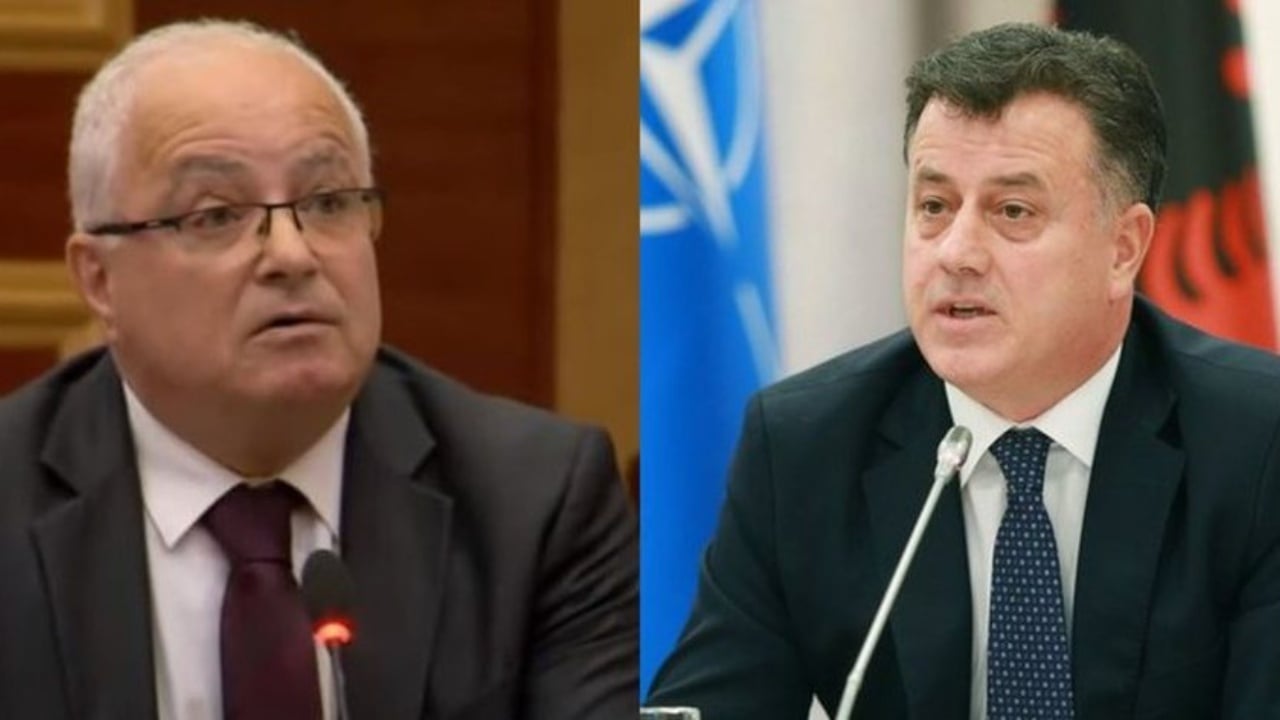
Internal clashes within the Democratic Party have returned to the center of debate following a public reaction from Edmond Spaho, who has made strong accusations against the DP’s Secretary General, Flamur Noka. According to Spaho, the conflict between them reached the point where, as he claims, “only a thread” separated them from a physical clash.
Direct accusations over leadership style
In his social media reaction, Spaho describes Noka as a person with arbitrary, arrogant and exclusionary behavior toward colleagues. According to him, for about two years he opposed, in direct communications, the way decisions were being made, claiming that regional leaders were often neither informed nor consulted.
This is another episode that fuels doubts over the way the DP’s internal structures function, a party that has long spoken of democratic standards, but continues to publicly produce accusations of centralization and closed decision-making.
Spaho: I was removed from Korça because Noka “didn’t like” me
According to Spaho, his removal from the political leadership of Korça County did not come because of results or performance, but for personal reasons and internal deals. He claims he was replaced because Flamur Noka “didn’t like” him and that the post had been promised to someone else.
In his reaction, Spaho also brings up an episode that, according to him, was presented as an argument for his replacement: the idea that the leadership should be taken over by another figure because of Përmet’s geographic proximity to Korça County. His version sheds light on a decision-making logic that, at least according to the public accusations, looks more like political improvisation than a party standard.
Berisha’s role and dissatisfaction with the “Refoundation”
Spaho says he complained dozens of times to Sali Berisha about Noka’s behavior. According to him, Berisha “strung him along,” giving him the impression that the problems would be resolved, but in the end, according to Spaho, the solution came with his removal from active politics.
In the same reaction, the former Democratic official raises broader accusations about the way the Refoundation process has been led, speaking of nepotism, decisions without meritocracy, servility and lack of responsibility after the election loss. These claims remain part of his public version, but they expose a tense climate within the opposition.
Accusations of sabotage and lack of analysis after the defeat
Spaho also claims that the DP sabotaged his personal campaign in the May 11, 2025 elections, presenting this as an unacceptable precedent within the party. According to him, party leaders campaigned against one of their own candidates on the open list, with the aim of preventing him from entering Parliament.
He also criticizes what he says was the silence of the party structures after the heavy election defeat, claiming that no real analysis was carried out and that no one assumed political responsibility. At the center of his criticism is Berisha himself, whom Spaho suggests bears the main burden of responsibility for the party’s direction.
Spaho’s statements are further evidence of the open crisis within the DP, where conflicts are no longer remaining in the corridors, but are emerging publicly with serious political and personal accusations.
So far, there has been no public reaction from Flamur Noka or other DP leaders regarding the claims raised by Spaho. In the absence of an official clarification, what remains clear is that the opposition continues to face deep internal divisions.