
Ylli Manjani used harsh language toward the protest on the Boulevard and the way it is presented in political discourse. In a podcast with Grida Duma, he opposed the idea that a crowd can speak in the name of “the people,” describing this as imposition rather than real representation.
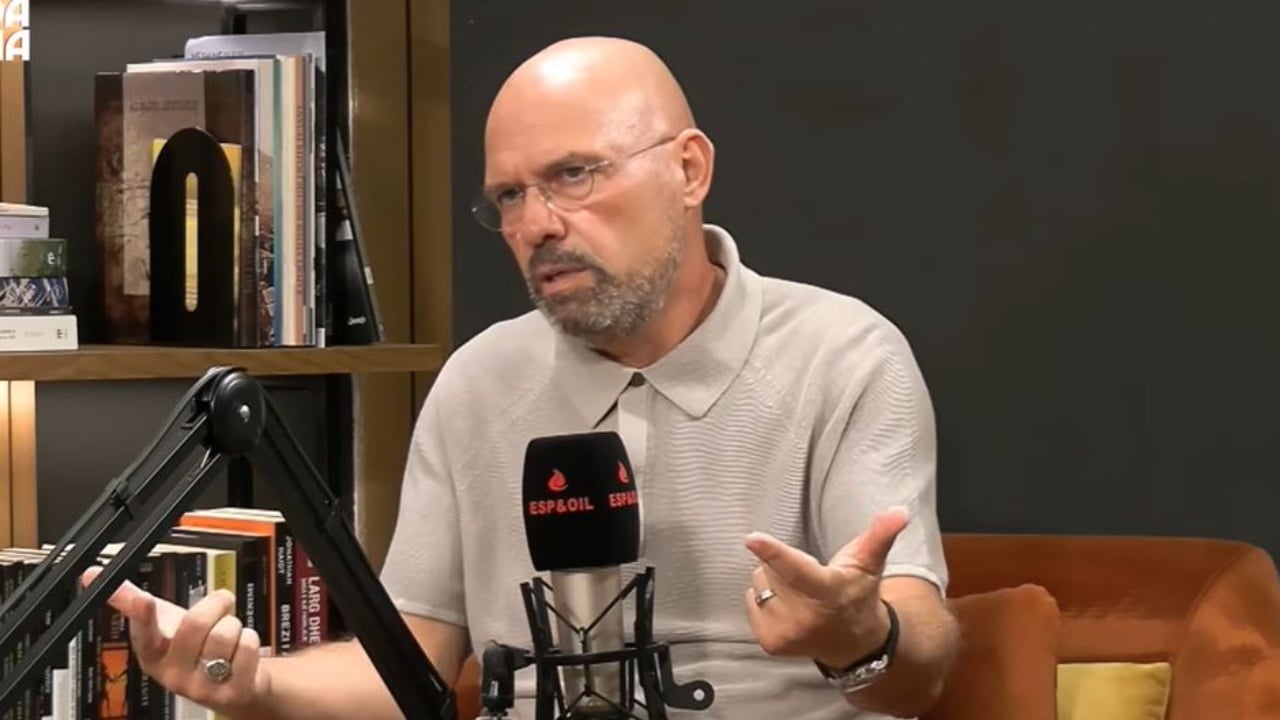
A strong statement on the protest
Commenting on the protest on the Boulevard, Manjani said the slogan “We are the people” is a claim that, in his view, should be examined carefully. He questioned the legitimacy of this identification, saying that “the people” is a word far larger than a gathering of protesters.
Crowds, according to Manjani, are a source of imposition
In the same conversation, Manjani said crowds disgust him, tire him and annoy him. According to him, a crowd functions as a “factory of violence,” in one form or another, suggesting that he sees mass mobilization more as collective pressure than as a free expression of citizenship.
He rejected what he considers imposition in the name of the majority, linking the protest to a logic of violent pressure that, according to him, cannot be accepted as a norm of public debate.
Comparison with walks around the Lake
Manjani took the argument further in numerical terms as well. According to his statement, even on the days with the highest turnout on the Boulevard, the number of protesters was comparable to the number of people taking a walk at the hills of the Artificial Lake.
This comparison aims to undermine the political narrative that presents the protest as broad popular representation, although the statement itself remains a political assessment and not an institutional verification of participation.
A debate touching on political representation
Manjani’s statements are expected to fuel debate over the way protests are used in politics, especially when participation is interpreted as a moral mandate or as the voice of all citizens. At its core, his position challenges precisely this formula: that a gathering, however loud, can declare itself “the people.”
The former minister’s position comes in a climate where protest remains one of the most commonly used instruments of political pressure, but also one of the most debated in terms of real representation.
Beyond the strong tone, the statement once again raises Albanian politics’ old question: who truly speaks in the name of the public, and who merely tries to replace it with noise.