
Movement at the border between Montenegro and Croatia has once again become a serious ordeal for thousands of travelers, including Albanians. At the height of the summer season, kilometer-long lines and waits lasting for hours are highlighting a problem that institutions acknowledge as recurring, but which continues to remain without a real solution.
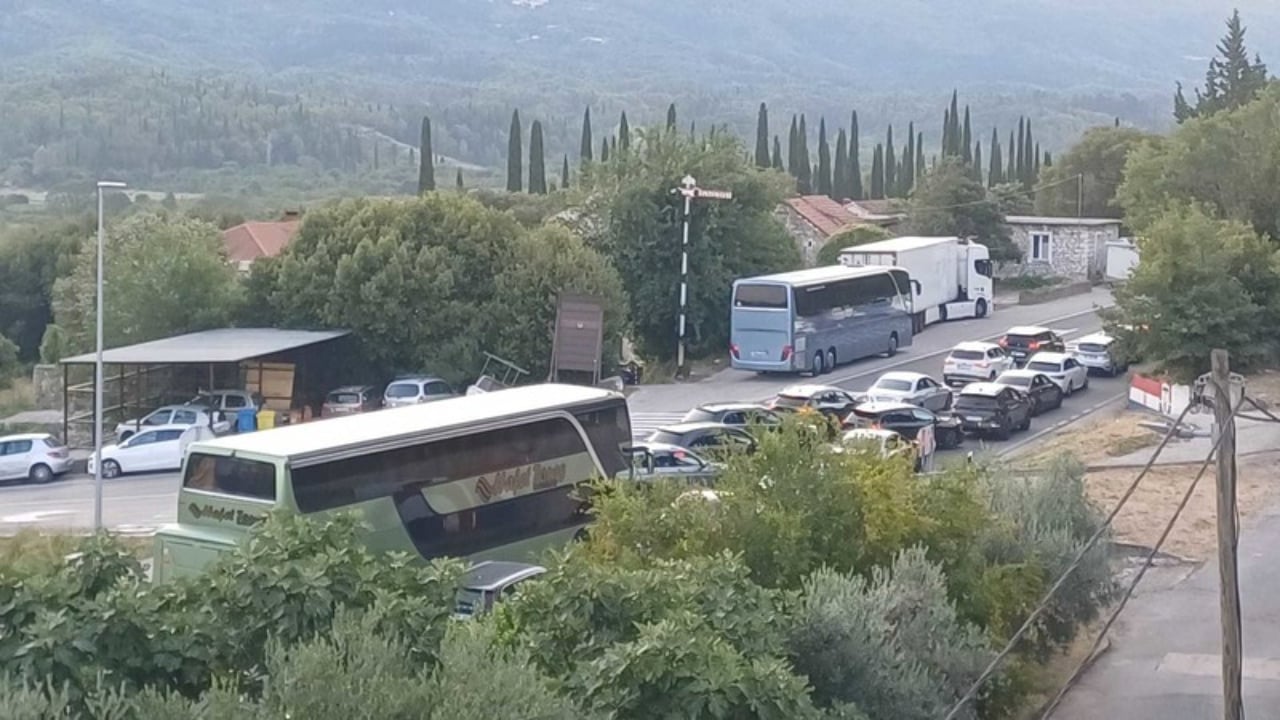
Lines of more than 20 kilometers at Karasovići-Debeli Brijeg
At the Karasovići-Debeli Brijeg border crossing, lines have formed that, according to reports, exceed 20 kilometers. Croatian media report waits of up to 10 hours, while there are also unofficial reports of even more severe cases.
Among the people stranded in traffic are also many Albanian citizens traveling toward Western European countries after their summer holidays. The return flow has increased pressure on a road corridor that for years has shown the same limitations during the summer.
Local residents step in where the system cannot cope
The situation on the ground has worsened to the point that residents of the Konavle area have opened their homes to travelers, offering use of toilets and opportunities to rest.
According to media reports, local authorities have also placed tanks of drinking water for people who have been waiting for hours in traffic. This intervention temporarily eases the situation, but at the same time shows that management of the flow remains problematic.
Tirana’s response: a yearly phenomenon, with no visible solution
Albania’s Ministry for Europe and Foreign Affairs has acknowledged that long waits at the Croatia-Montenegro border have become a phenomenon repeated almost every summer because of the high flow of travelers.
According to the official version, the increase in movement in the region and the large number of people traveling to Albania by land during the tourist season bring, especially on days of peak congestion, long delays at border crossings.
The ministry says Albanian diplomatic missions are in communication with the relevant authorities with the aim of speeding up procedures and increasing capacity to reduce waiting times.
300,000 crossings during the summer and calls for alternative routes
According to the ministry, around 300,000 Albanian citizens pass through this road corridor during the summer season, significantly increasing the burden on infrastructure and border services.
For their part, Croatian authorities have called on travelers, whenever possible, to use alternative itineraries through Bosnia and Herzegovina or sea transport from Durres to Italian ports to avoid the long lines.
The repeated blockage on this border segment is directly affecting thousands of citizens at the height of the season, while official reactions so far describe the problem more than they provide a concrete solution.
For travelers on the ground, amid high temperatures and long hours of waiting, the reality remains the same: an overloaded corridor that summer after summer tests the limits of patience and institutional capacity.