
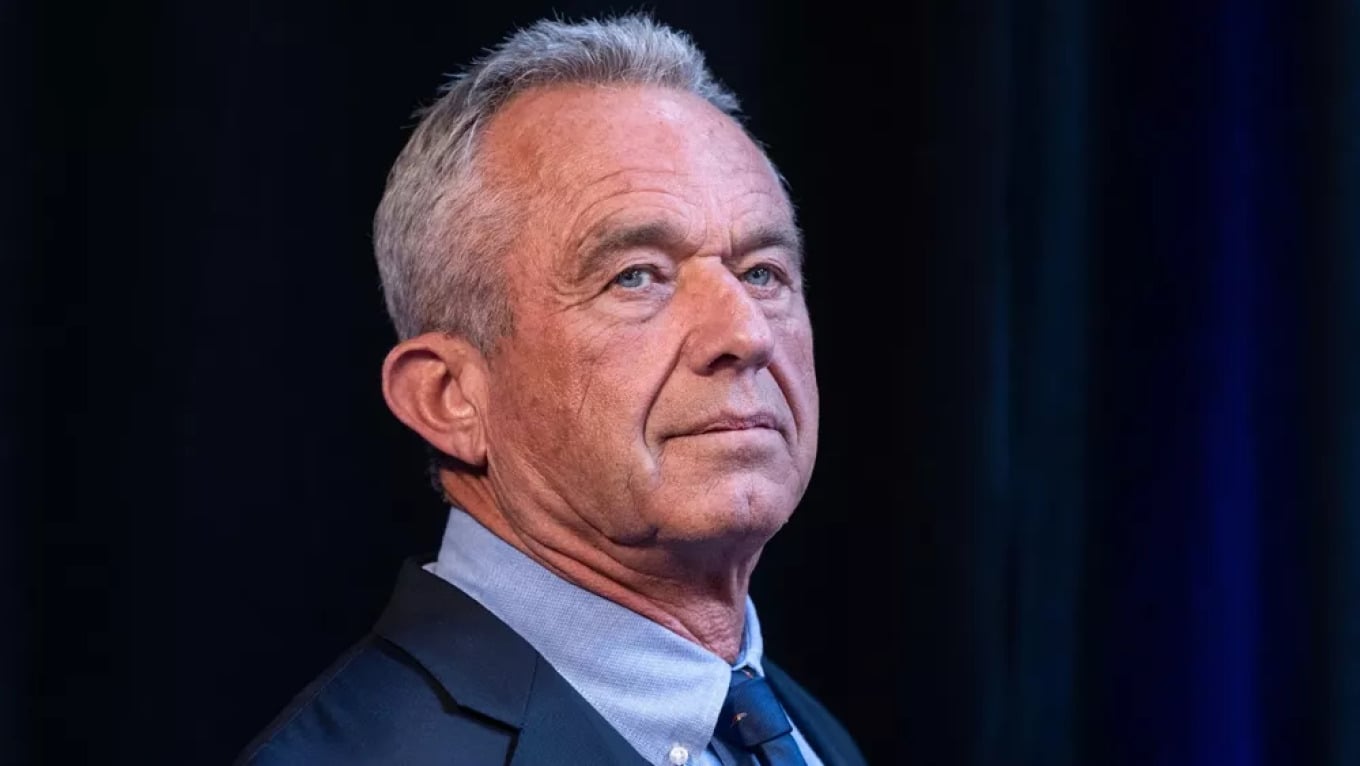
A new political and scientific clash has erupted in the United States following statements by U.S. Health Secretary Robert F. Kennedy Jr., who blamed Anthony Fauci for the way the Covid-19 pandemic was managed. But alongside the political attack, a series of Kennedy’s claims about vaccines and infectious diseases have once again moved to the center of the debate, claims that are disputed by the scientific community.
Accusations against Fauci and defense of Trump
During an interview with CNN, Kennedy said Fauci bears responsibility for the management of the pandemic in the United States. At the same time, he defended President Donald Trump, claiming that Trump had sought to end lockdowns and that the burden of those decisions did not fall on him.
According to Kennedy’s version, the greatest damage during the pandemic was caused by the lockdowns. However, that argument does not stand alone in the debate: public health experts have noted that restrictions were imposed mainly by state and local authorities, at a time when hospitals and intensive care units were facing serious overload.
Fauci in Congress and the political climate around his testimony
Kennedy’s statements came a few days after Fauci testified in Congress, where he invoked the Fifth Amendment more than 100 times, refusing to answer questions that could incriminate him.
The hearing was accompanied by strong criticism from Republicans over his role during the pandemic, once again turning the management of Covid-19 into an open political confrontation in Washington.
Claims about vaccines and experts’ objections
In the same interview, Kennedy also repeated controversial claims about vaccines, measles and the RSV virus. Ashish Jha, the former Covid-19 response coordinator in Joe Biden’s administration, responded by saying that responsibility for political decisions lies with political leaders, not with scientists who provide advice.
Jha also stressed that a large part of Kennedy’s statements about vaccines are factually inaccurate. The debate here is not only political: it directly affects the credibility of health information coming from the highest levels of the U.S. administration.
Measles, RSV and debates over scientific facts
Kennedy said that the communities hardest hit by measles are mainly religious groups that refuse vaccination, and he insisted that he has never questioned the effectiveness of the MMR vaccine. But he has been criticized for previous statements in which he suggested that immunity created by the vaccine may fade over time and contribute to the spread of measles.
Health experts underline that two doses of the MMR vaccine provide about 97% protection against measles and that outbreaks occur mainly in communities with low vaccination rates.
Kennedy also claimed that the RSV virus is linked to “gain-of-function” laboratory experiments, a statement that is not supported by scientific evidence. RSV was identified as early as the late 1950s, long before such experiments were developed.
Questions about Covid vaccines and what the data show
Kennedy also questioned the benefits of Covid-19 vaccines for children, asking for evidence that they have done more good than harm. He also said that there are dozens of studies linking the use of paracetamol during pregnancy with autism.
However, the scientific community stresses that a cause-and-effect relationship has not been proven on this issue, while leading medical organizations continue to recommend paracetamol during pregnancy when necessary.
According to World Health Organization data, more than 700 million doses of Covid-19 vaccines have been administered in the United States. Studies estimate that the vaccines saved about 2.5 million lives worldwide during 2020-2024 and significantly reduced the risk of infection, hospitalization and complications, including in children, while severe side effects were rare.
The clash between political statements and scientific evidence is bringing back to the center a debate that remains heated in the United States even years after the peak of the pandemic.
In this climate, the weight of public statements by health officials remains decisive, especially when their claims run counter to the scientific consensus.