
After a six-hour marathon meeting, the Law Commission approved the draft law on magistrates’ pay with the votes of its Socialist Party members, sending it to Thursday’s plenary session. The clash was not merely technical: representatives of the justice system openly lined up against the majority, considering the proposed formula unacceptable.
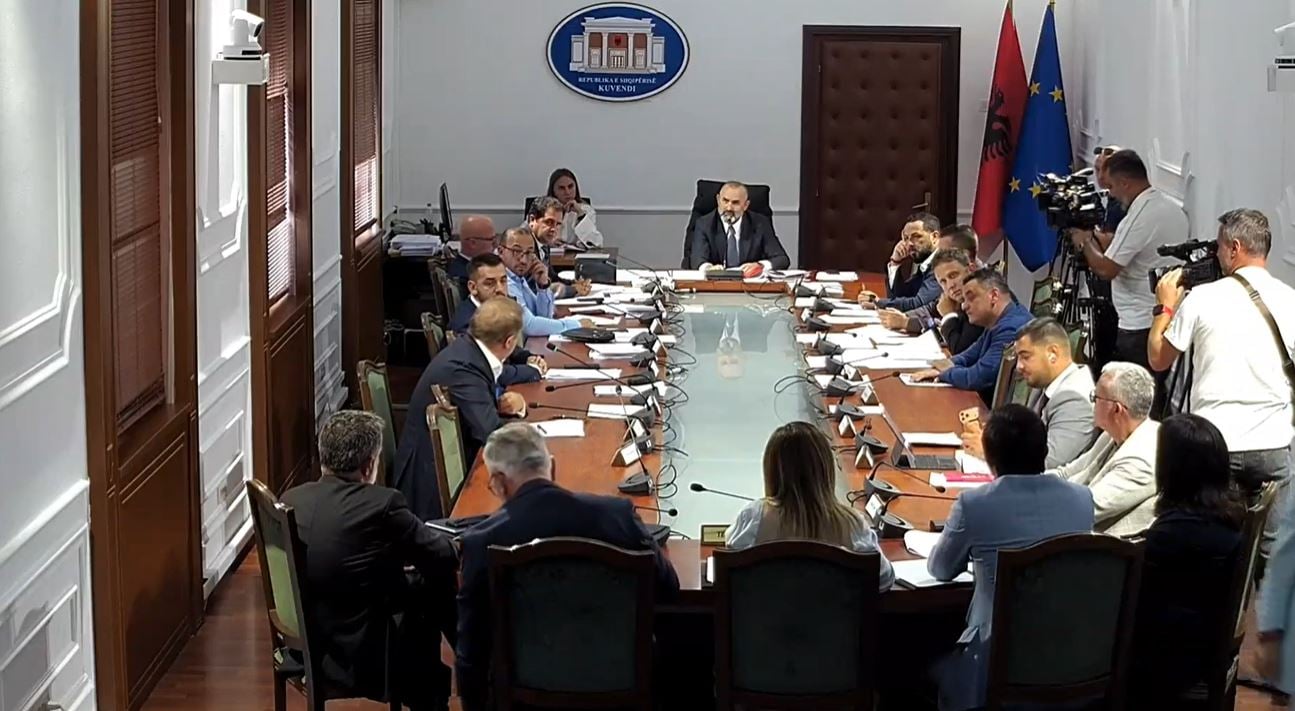
Approved only with the majority’s votes
The draft law passed in committee only with the votes of the Socialist majority and is now expected to go to Parliament, where 84 votes are needed for approval. This moves the debate from committee to the plenary chamber, but without easing the clash that has emerged between political power and justice institutions.
According to the version defended by the majority, the initiative aims to address the issue of magistrates’ pay. But the way it has been pushed forward, despite objections raised during the hearing session, shows that politics has chosen not to give ground on an issue in which the justice system is seeking a different interpretation of constitutional obligations.
Justice system faces off with the majority over pay rise
For the first time, the Socialist majority faced representatives of the justice system directly after the High Judicial Council and the High Prosecutorial Council raised magistrates’ salaries themselves by about 43 percent. Under this institutional interpretation, the decision-making was based on a ruling by the Constitutional Court and did not wait for Parliament’s intervention.
It is precisely this move that appears to have deepened the conflict: justice institutions claim a binding constitutional standard, while the majority is bringing to Parliament another formula, far more limited.
Judges Association: the proposal is a “mockery”
At the hearing held in the commission, Engert Pëllumbi, head of the Albanian Judges Association, did not retreat from the position he had taken earlier, even though he had been at the center of Prime Minister Edi Rama’s criticism in recent days.
He described the solution proposed by the majority, which according to the discussion provides for a 2 percent increase, as unacceptable. “The concrete project not only fails to respect the Constitutional Court’s decision, but I would consider it a mockery of that decision and of magistrates’ rights,” Pëllumbi said.
Objections also from the High Prosecutorial Council and the High Court
Reservations about the draft law did not come only from the Judges Association. Mirela Bogdani, head of the High Prosecutorial Council, said that increasing magistrates’ pay serves as an opportunity for a sustainable justice system and did not agree with the draft being discussed in parliamentary committees.
Ilir Panda, deputy chairman of the High Court, spoke along the same lines, saying the proposed formula does not guarantee the binding standards set by the Constitutional Court. This makes it even clearer that the opposition is not peripheral, but comes from several key parts of the system.
Tension in committee and a conditional dialogue
The debate in the commission also featured sharp exchanges. Ulsi Manja clashed with Gert Hoxha, head of the Judges Union, accusing him of trying to impose his agenda on the commission through comments on the Constitutional Court’s ruling.
However, the judges did not entirely close the door to negotiations. Gert Hoxha indicated that dialogue with the government on salaries could take place, but only if there is, in his view, a serious invitation and a neutral setting.
The matter now moves to Parliament, where beyond the numbers it will also test how willing the government is to listen to the objections of institutions that the Constitution itself has provided to be independent.
The clash over magistrates’ pay has long moved beyond the boundaries of an administrative debate and is emerging as another test of the tense relationship between politics and the justice system.