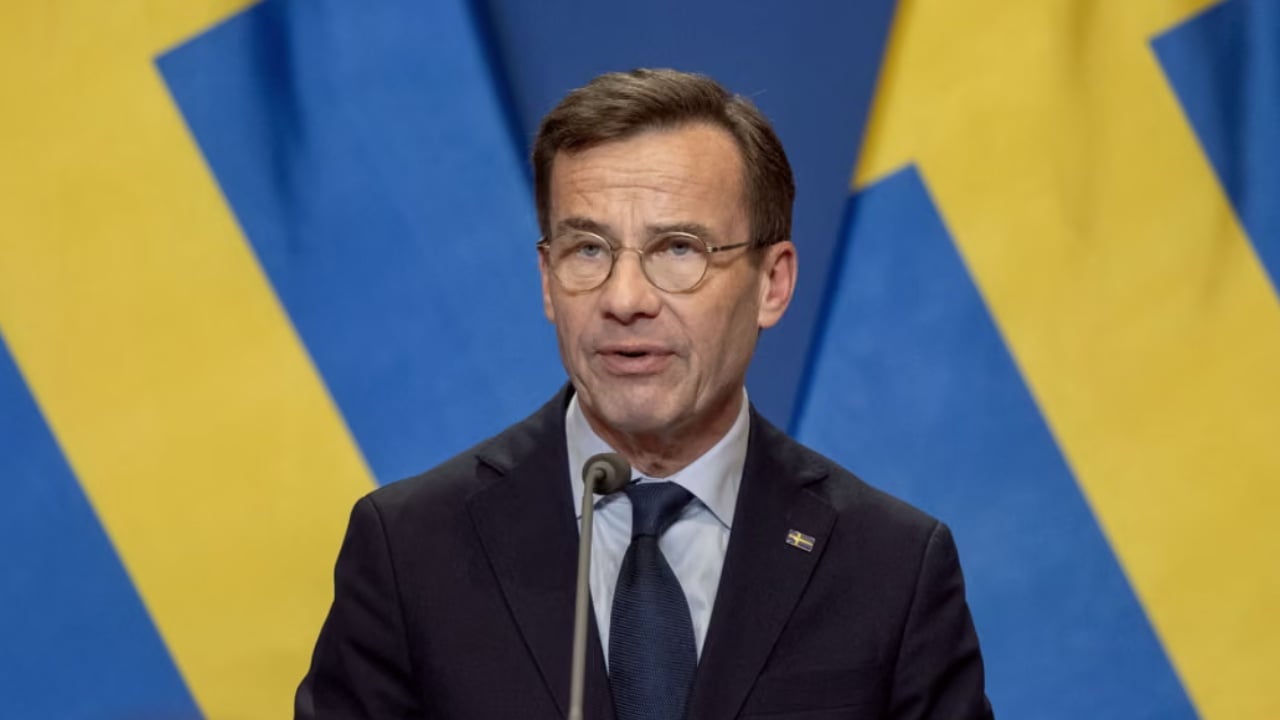
A political shift has taken shape in Sweden, where Prime Minister Ulf Kristersson has submitted his resignation after the final preliminary election results gave an advantage to the center-left bloc. His move opens the parliamentary procedure for forming a new government, but not necessarily a quick solution to the political deadlock.
A narrow majority, but enough for change
According to the final preliminary results, the left-wing opposition parties won 176 seats, three more than the right-wing governing coalition, known as the Tidö coalition and backed by the Sweden Democrats.
This minimal gap was enough to force Kristersson from office after four years at the head of government. In his resignation letter, he said it now falls to the speaker of parliament to lead the process of forming the new cabinet.
Andersson moves ahead, but with no easy path
Kristersson’s resignation clears the way for Social Democratic leader Magdalena Andersson to begin efforts to build a new majority. In her response after the result, she said voters had chosen a new direction, putting climate, education, healthcare, elderly care and migration at the forefront.
However, the move from numerical victory to actual governing remains complicated. Andersson has invited the Left Party, the Centre Party and the Greens to initial talks, but the differences between them are well known and not merely tactical.
Clashes that could block the new majority
One of the most difficult sticking points concerns relations between the Centre Party and the Left Party. The Centre Party has ruled out governing together with the Left, while the latter is demanding a role in government in exchange for its support.
There are also differences over taxes, nuclear energy and economic policy. The Social Democrats, the Greens and the Left support tax increases in some areas, while the Centre Party is seeking cuts. That makes it clear that a majority in seats does not automatically translate into political stability.
Losses for the right, mixed signals for the main parties
The result also dealt a blow to the Sweden Democrats, the right-wing party that had supported Kristersson’s government. For the first time since its founding, it lost support in a general election, slipping from second place to third.
On the other hand, the Social Democrats remain the largest political force in the country, but this camp also comes out with a cost: their result is described as the weakest in the party’s electoral history. That makes the picture even more unstable than the formal seat distribution suggests.
Parliamentary process and the scenario of a minority government
Parliament speaker Andreas Norlén is expected to begin consultations with representatives of all parties before proposing a candidate for prime minister. Kristersson has described the post-election situation as complicated and, in his account, called for a constructive approach from the parties.
With compromises appearing difficult, a minority government remains one of the most realistic scenarios in Swedish politics. Andersson, who previously served as prime minister from November 2021 to October 2022, is expected to seek broad support, while debates over migration, integration and climate could become the first serious test of the new majority.
Kristersson’s resignation closes one phase of right-wing rule, but does not guarantee a smooth transition. In Stockholm, parliamentary arithmetic has produced change; the challenge now is whether the parties can also produce a functional government.