
The majority used a vote to bring one of its most sensitive clashes with the justice system to a close, but not the political and institutional conflict that accompanies it. With 84 votes in favor, Parliament approved the new formula for magistrates’ salaries, observing in its own way the deadline set by the Constitutional Court while rejecting the much higher demands put forward by the justice bodies.
What Parliament approved
The bill passed by Parliament provides for an increase in the reference salary of about 8,500 lek. This figure remains far below the request of magistrates, the High Judicial Council and the High Prosecutorial Council, which had sought an increase of approximately 80,000 lek.
The vote was carried only with the votes of the majority. The opposition opposed the formula, calling it a “constitutional coup,” showing that the issue is not being read simply as a technical debate over salaries, but as a direct clash over the limits between the branches of power.
Rama: The Constitutional Court cannot tell Parliament how to vote
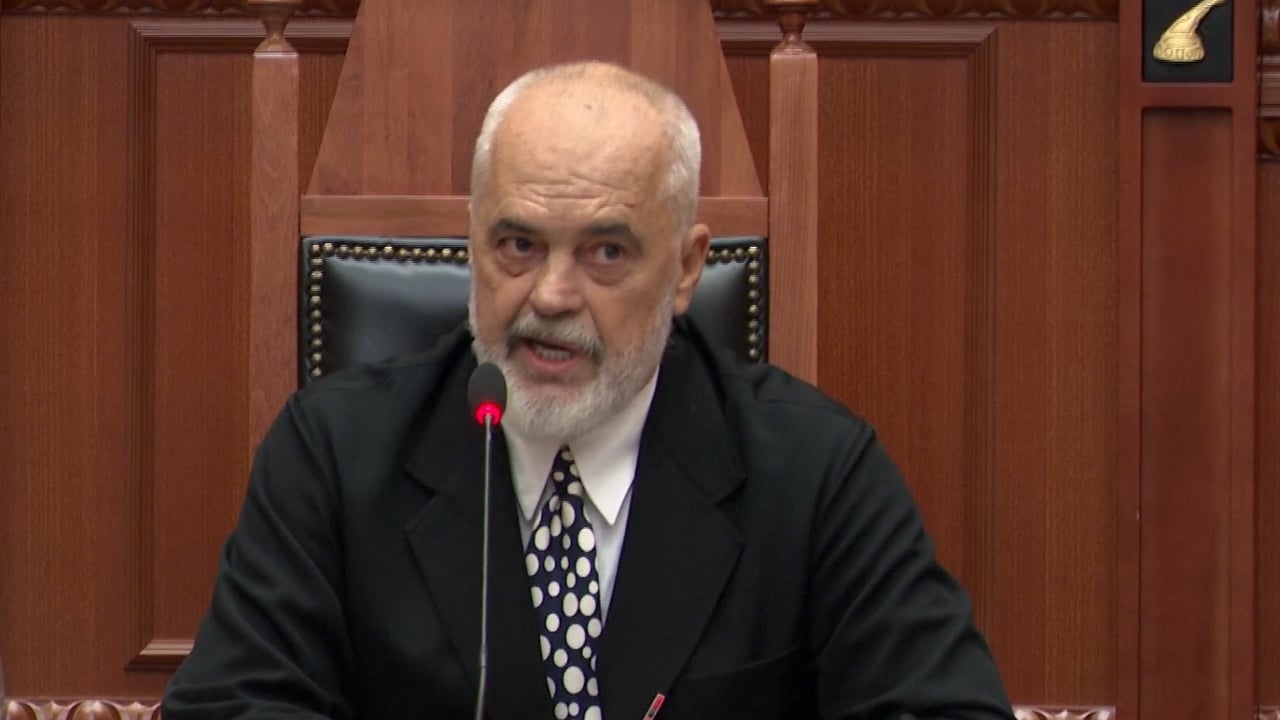
In the session, Edi Rama defended the government’s line that the Constitutional Court has the right to strike down a norm it considers problematic, but not to dictate the specific formula that Parliament must approve.
According to the prime minister’s version, the Constitutional Court is an “arbiter” and cannot replace the lawmaker in determining the amount, formula or mechanism of salaries. He insisted that setting norms remains Parliament’s competence and that deadlines imposed by another branch of power raise, in his view, a problem for institutional balance.
The real debate: salary, privilege and the state pyramid
Rama argued that after the justice reform, magistrates’ salaries were increased sharply to support the new system, but that this, according to him, disrupted the salary pyramid in public administration.
The government opposes the idea that magistrates’ salaries should automatically rise whenever there are increases for other categories in the state. On this point, the majority’s message is clear: any further linear increase for judges and prosecutors is not seen as a constitutional obligation, but as a burden that must be reassessed in relation to public taxes and the salary hierarchy in the state sector.
The clash with the justice system remains open
Although the law was approved, the tone of the debate in Parliament showed that the relationship between the government and justice institutions remains tense. Rama raised concerns about what he presented as excessive interference by justice structures in areas that, according to him, do not belong to them.
He also mentioned SPAK and the Special Court against Corruption and Organized Crime as two elements he considers successes of the reform, while maintaining a critical stance toward the two councils of the system. This position broadens the debate beyond salaries and places the issue on the wider ground of control, independence and the balance of powers.
Warning of a new law
The prime minister said the government has started work on a new law aimed at ending this deadlock and rebalancing the scheme. According to him, contacts have also begun with the Council of Europe and European justice efficiency structures to address the problem.
The political message of the majority is that the newly approved formula is seen only as a temporary solution, while the real battle will shift to the new law. For the opposition and justice institutions, it remains to be seen whether this will be read as a correction of the system or as another attempt by the executive to rewrite the boundaries between the branches of power.
The approval with 84 votes gave Parliament a procedural way out of the Constitutional Court’s deadline, but it did not end the conflict. On the contrary, it made more visible the tension between the political majority and the institutions that are supposed to function separately from one another.
At its core, the debate is not only about how much magistrates will be paid, but who decides this and how far each branch of power can go without entering the territory of another.