
The arrest of Vlora Hyseni, the former director of SHISH, became the issue that dominated the meeting of the parliamentary Law Commission, even though the agenda included a draft law on administrative-territorial division. The opposition presented the event as an alarm for the state and national security, while the commission leadership called for the debate not to stray from the official agenda.
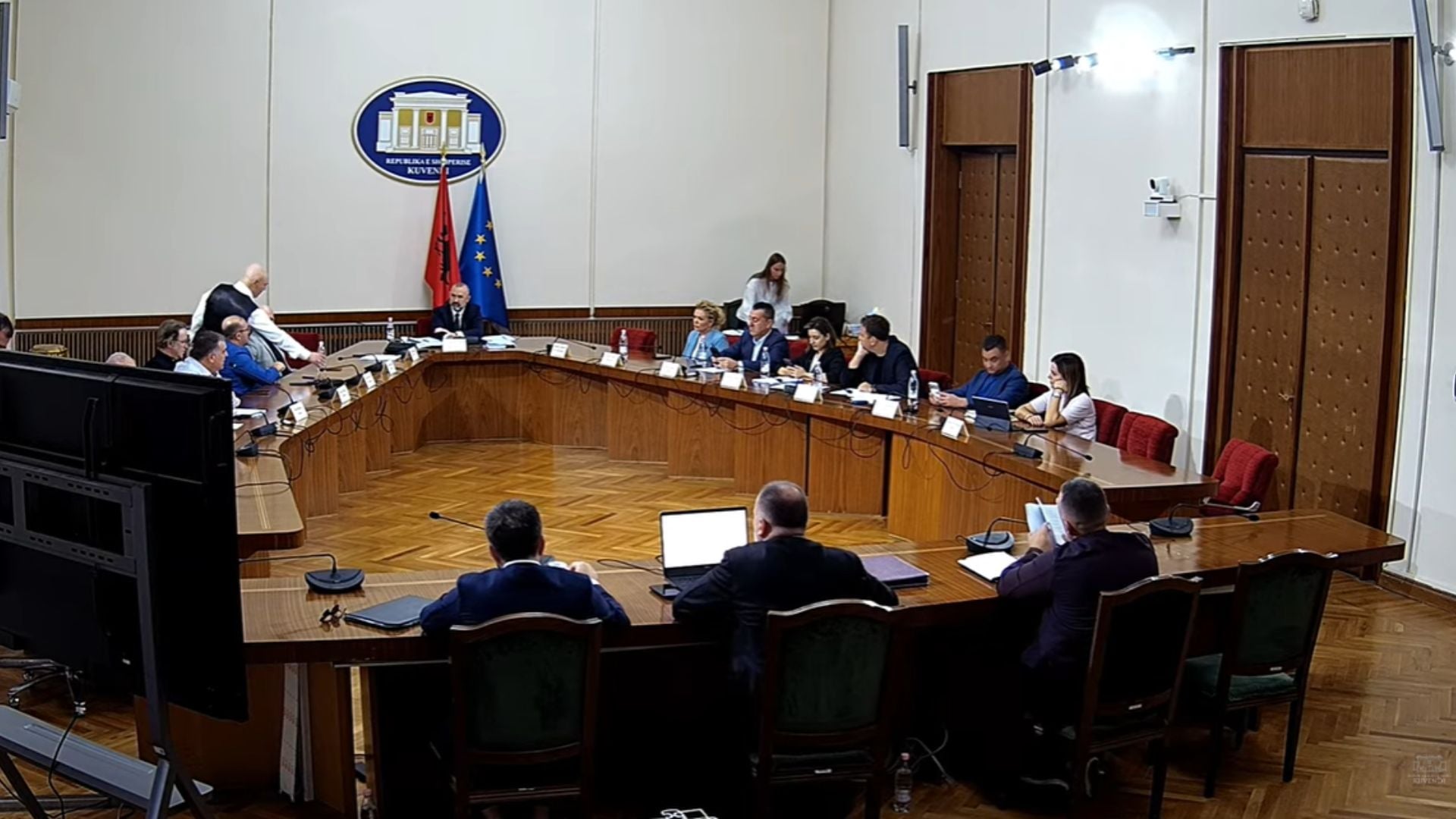
The clash began at the very start of the meeting
At the opening of the session, the commission’s deputy chairman, Oerd Bylykbashi, asked for attention to be focused on the previous day’s arrest of the former head of SHISH. According to him, this issue should be at the center of discussion not only in the Law Commission, but in all parliamentary committees.
Instead of a debate on the planned draft law, the opposition insisted that developments affecting security structures cannot be treated as a side episode while Parliament continues as normal with other matters.
Bylykbashi: yesterday’s scandal cannot be ignored
Bylykbashi sharply attacked the majority, linking the draft law on the agenda to the political climate created after Hyseni’s arrest. In his reaction, he claimed that the country is facing the penetration of organized crime into key nodes of the state and that Parliament is avoiding debate on the essence of the problem.
Along the same lines, he said it was unacceptable for Parliament to deal with reforms that, according to him, harm citizens, while an issue the opposition considers an institutional scandal remains unanswered.
Korreshi: “The state has fallen”
MP Saimir Korreshi further sharpened the tone, declaring that the situation was such that, in his view, the priority should be national security and not discussion of the administrative map. He also mocked the change of the meeting room, saying he thought a meeting of the National Security Council had been called.
In his remarks, Korreshi used strong political language, accusing the majority of acting as if nothing had happened and of pushing ahead with other issues while, under the opposition’s version of events, a serious development remains without an in-depth institutional debate.
Manja called for a return to the agenda
Commission chairman Ulsi Manja refused to let the meeting shift entirely to Hyseni’s arrest. He insisted that the commission should continue with the scheduled draft law, which he described as the most important issue for the commission’s work that day.
Manja said that if MPs had procedural suggestions, they could present them, but while adhering to the agenda. He then offered two minutes each for anyone who wanted to speak about the previous day’s development before the commission moved on to the official discussion.
The clash in the Law Commission once again highlighted the gap between the political urgency claimed by the opposition and the majority’s effort to keep the debate within a procedural framework.
In essence, the meeting showed that the arrest of the former SHISH director has opened another front of political confrontation, with the opposition speaking of a state crisis while the majority has chosen not to let the issue hijack the parliamentary agenda.