
On the 10th anniversary of the Justice Reform, Prime Minister Edi Rama defended the political record of the 2016 constitutional intervention, presenting it as a turning point against impunity. But in the same statement, he also acknowledged that the process has exposed weaknesses, failures and distortions that, according to him, cannot be hidden.
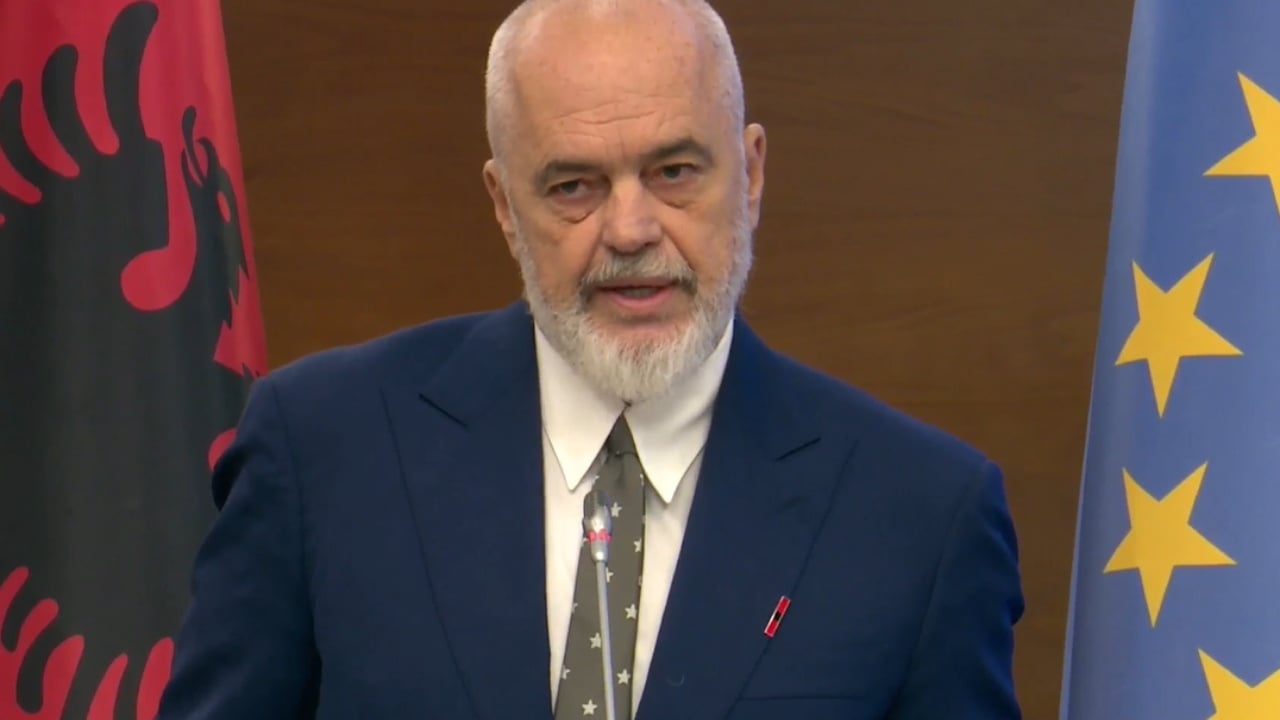
Rama calls the reform a break with the old order
According to the prime minister’s account, the 2016 constitutional changes translated one of his majority’s strongest political promises into law. He said the intervention aimed to free the justice system from political influence, after a dependency that, according to him, had accompanied the Albanian state since its founding.
Rama said the Justice Reform “demolished the old structure of judicial power” and built a new structure to fight corruption and organized crime. This remains the government’s official approach to the reform, presented for years as one of the main pillars of the Socialist mandate.
After 10 years, an open admission of weaknesses and failures
Unlike the triumphalist rhetoric that has often accompanied this issue, Rama acknowledged that the balance of the decade is not made up only of achievements. He said there have been “strengths,” but also “weaknesses from confronting reality.”
The prime minister also admitted that during the implementation of the reform there have been “failures and distortions,” suggesting that the system’s actual functioning has not always followed the expectations announced at the start. The statement comes at a time when the reform’s record continues to generate political and institutional debate.
The claim of ending impunity remains the strongest part of the message
At the core of his statement, Rama insisted that the 10 years of reform have struck what he called the “100-year-old cult of impunity.” This is the strongest political claim the government continues to link to the changes in the justice system.
However, the public acknowledgment of weaknesses and distortions itself shows that the official narrative of linear success does not remain untouched. Even as the government speaks of freeing justice from politics, the question remains how far the new system has actually fulfilled its promises of independence, efficiency and equality before the law.
A political balance sheet that requires more than slogans
The prime minister’s statement seeks to defend the reform as a long-term political investment, despite the costs and problems encountered. He summed this up with the idea that the burden of the Justice Reform “is worth the rent.”
But after 10 years, the discussion on justice is unlikely to be closed with political formulas. If the reform has produced strength, as the government says, then the failures publicly acknowledged also require a clearer institutional balance sheet and not only self-assessment by those in power.
Rama used the anniversary to reaffirm that the Justice Reform remains a cornerstone of his political project.
But his own statement, with its admission of weaknesses, failures and distortions, shows that after a decade the debate over justice is still far from over.