
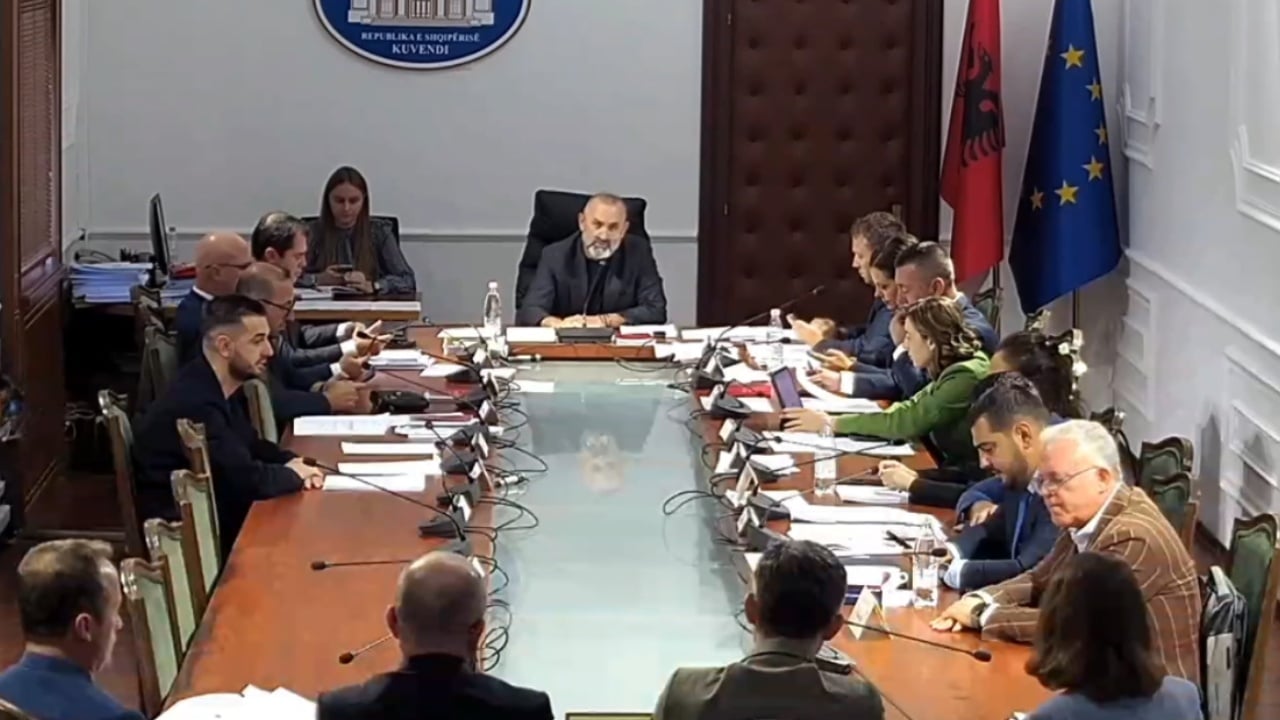
The debate over money laundering returned to the Law Committee, where alongside aligning the law with European Union rules, a more difficult question was also raised for institutions: how effectively is its enforcement actually working on the ground. The opposition demanded accountability for concrete results, while the head of the Financial Intelligence Agency responded to the criticism with statistics on referrals made during 2025.
The opposition targets enforcement, not just the law
During the committee discussions, opposition lawmakers shifted the focus from legal amendments to the practical balance sheet of the fight against money laundering. In their view, the concern is not simply formal alignment with the EU, but whether the state mechanism is actually striking dirty money.
Korreshi raised doubts about large inflows of money and the lack of action against higher levels, saying seizures are being seen but no clear accountability for people in power. Bylykbashi also argued that money laundering, in his view, is harming the economy, competition and squeezing small businesses.
AIF responds with 2025 referral figures
In response to these criticisms, the Director General of the Financial Intelligence Agency, Ervin Koçi, presented data on the institution’s activity during 2025.
According to Koçi, 269 referrals were made to law enforcement bodies: 24 to district prosecution offices, 32 to SPAK, 133 to the police and 80 to the General Directorate of Taxation. He also said the police have referred 85-90% of the cases and that, in his assessment, SPAK has handled these cases by launching criminal investigations.
The figures do not close the questions over the real impact
However, the presentation of the referrals did not resolve the doubts raised in the committee. The debate remained centered on the gap between the number of cases reported and the final result citizens expect to see: tangible investigations, concrete accountability and action against networks that distort the market.
At this point, the discussion once again highlighted the gap between institutional reporting and public perception of the state’s real strength in the face of money laundering.
Parliament’s limits on changes to the draft law
While the Democratic members of the committee voiced support for the changes and asked for more time for discussion, the chair signaled that the room for intervention in the content is limited.
Ulsi Manja clarified that, when it comes to draft laws aimed at full alignment with European regulations and directives, Parliament may intervene only in terms of legislative technique and not in the substance of the provisions, arguing that any change in content would disrupt the balance of the legal package.
The debate in the Law Committee showed that the issue is not being seen only as an obligation to harmonize with the EU, but as a test of the state’s seriousness toward a phenomenon that for years has raised doubts about its impact on the economy and competition.
For now, institutions are presenting figures. But the political and public demand remains different: how many of these referrals translate into investigations, punishments and real action against money laundering.