
Kosovo’s Assembly enters an extraordinary session today amid a heated political climate and pressure on the ground. There are 22 items on the agenda, but attention is focused on amending the Law on the Specialist Chambers and the Specialist Prosecutor’s Office, while protesters have blocked the entrance outside Parliament.
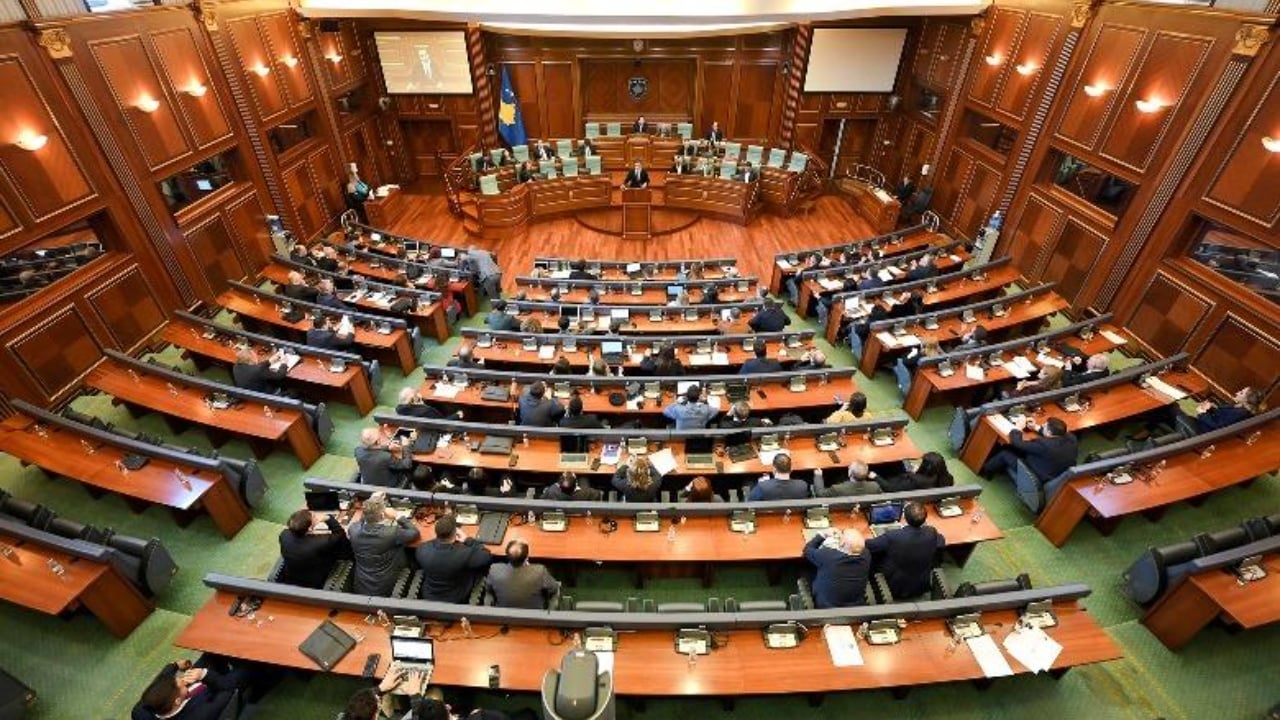
The session begins amid political tension and a blockade outside the building
The plenary session is scheduled to begin at 09:00. According to reports from the scene, protesters called by the War Veterans’ Organization remained overnight in front of the Assembly building and blocked the entrance.
Their demand is linked to the approval of the draft law amending this law, adding pressure on lawmakers at a time when the Assembly is also facing another institutional deadlock.
The draft law first goes through the Legislation Committee
Before it enters the plenary hall, the draft law on the Specialist Chambers is expected to be first reviewed at 08:00 by the parliamentary Committee on Legislation.
Only one hour later, it is scheduled for consideration in plenary session, showing the accelerated pace at which an issue of high political and institutional weight is being pushed forward.
The Kurti-Hamza meeting and signals on the votes
This issue was also at the center of the meeting held on Saturday between Prime Minister Albin Kurti and PDK chairman Bedri Hamza.
According to Hamza’s public statement after the meeting, the discussions had concluded and he asked for the law to be approved first in two readings. According to him, the issue of the president could then be discussed, while the PDK was ready to give its support.
Two parallel deadlines: the law and the election of the president
The clash over the Specialist Chambers is unfolding at the same time as the deadline for electing Kosovo’s new president. Lawmakers have today and October 6 at their disposal to elect the new head of state.
If this process fails, the country risks heading to extraordinary elections. This turns today’s session into a double test for the parliamentary majority and for the political class’s ability to avoid a new institutional crisis.
In practice, the parliamentary day in Prishtina is not unfolding simply as a legal procedure, but as a confrontation between political pressure, demands from the street and calculations over the majority.
It remains to be seen whether the Assembly will manage to move forward with the legal amendments and at the same time unblock the process for the president, without pushing the country toward another political crisis.