
The debate over the territorial reform grew tense in Parliament, where the opposition questioned the criteria being followed in deciding the fate of municipalities. At the center of the accusations were the cases of Divjaka and Vau i Dejës, which according to the version presented by Gazmend Bardhi show that decision-making is not being guided by administrative standards, but by political interests.
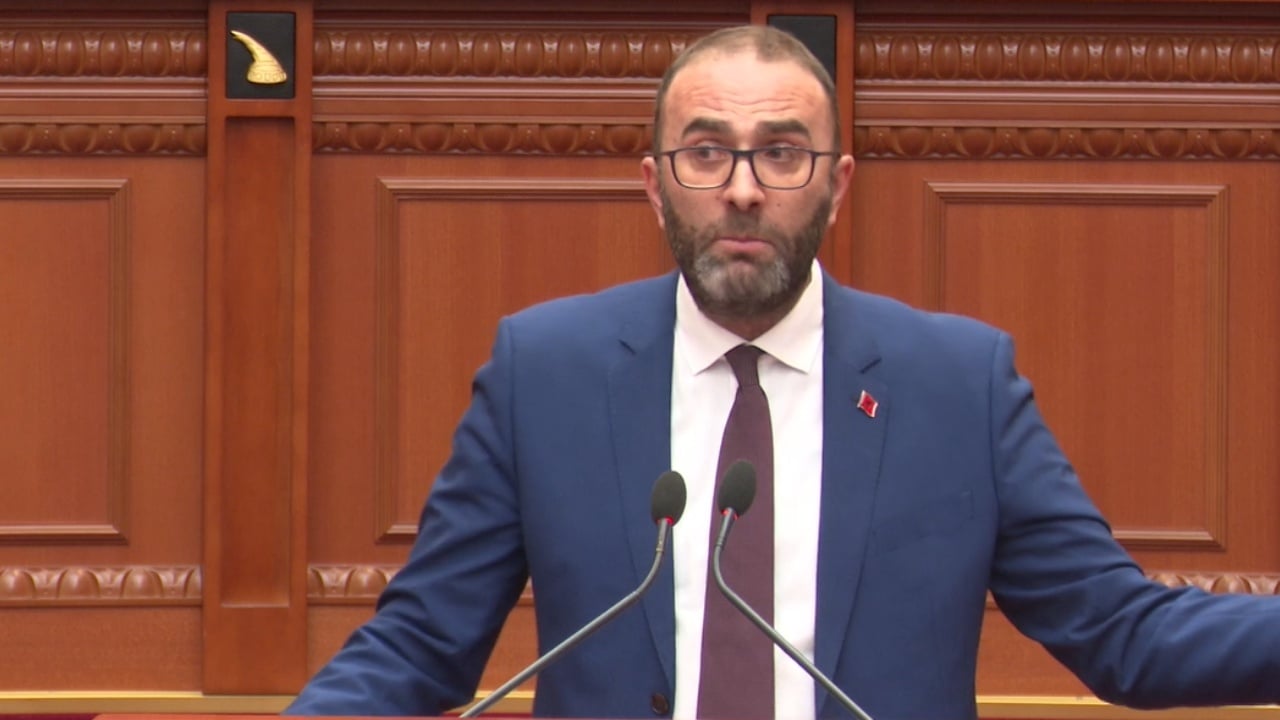
Clash in the session over the new local map
The vote on the territorial reform sparked a heated debate in the parliamentary session, with the opposition challenging the majority’s reasoning for the changes in the administrative division.
Gazmend Bardhi, head of the Democratic Party’s parliamentary group, raised questions about the way certain municipalities are being treated and called for a public explanation of the criteria being used in Parliament.
Divjaka at the center of the accusations
Bardhi said there is no logic in dissolving the Municipality of Divjaka, which he described as one of the model municipalities.
According to him, this move is not based on genuine territorial organization reasons, but on a political relationship with the municipality’s current mayor. Bardhi claimed that Divjaka is being penalized because Belinda Balluku does not like its mayor.
The case of Vau i Dejës and accusations of a political bargain
Along the same lines, Bardhi also drew attention to the Municipality of Vau i Dejës, which he claimed is being kept not because of any clear criterion, but for political calculations.
According to his statement in Parliament, this municipality is being preserved as part of a political bargain linked to votes in Parliament and to the request of Tom Doshi’s PSD.
Call for explanations on the criteria
The core of the opposition’s accusation is that the territorial reform risks being used as a selective instrument against communities, instead of being based on the same standards for all local units.
The clash once again highlighted the lack of transparency that often accompanies such decisions, especially when political arguments appear to carry more weight than the interests of citizens.
At this stage, Bardhi’s accusations are part of the political debate in Parliament and require a reasoned response from the majority on the concrete reasons behind these choices in the territorial reform.
It is precisely on these criteria that the credibility of the process will be measured: whether this is a real administrative reorganization, or a map drawn according to the interests of the day.