
The government’s new package on protests has begun to produce its first practical effect in Tirana. According to the official version from Police, after the gathering held a day earlier in front of the Prime Minister’s Office, 16 administrative measures were imposed on protesters, while criminal proceedings were initiated against two minors.
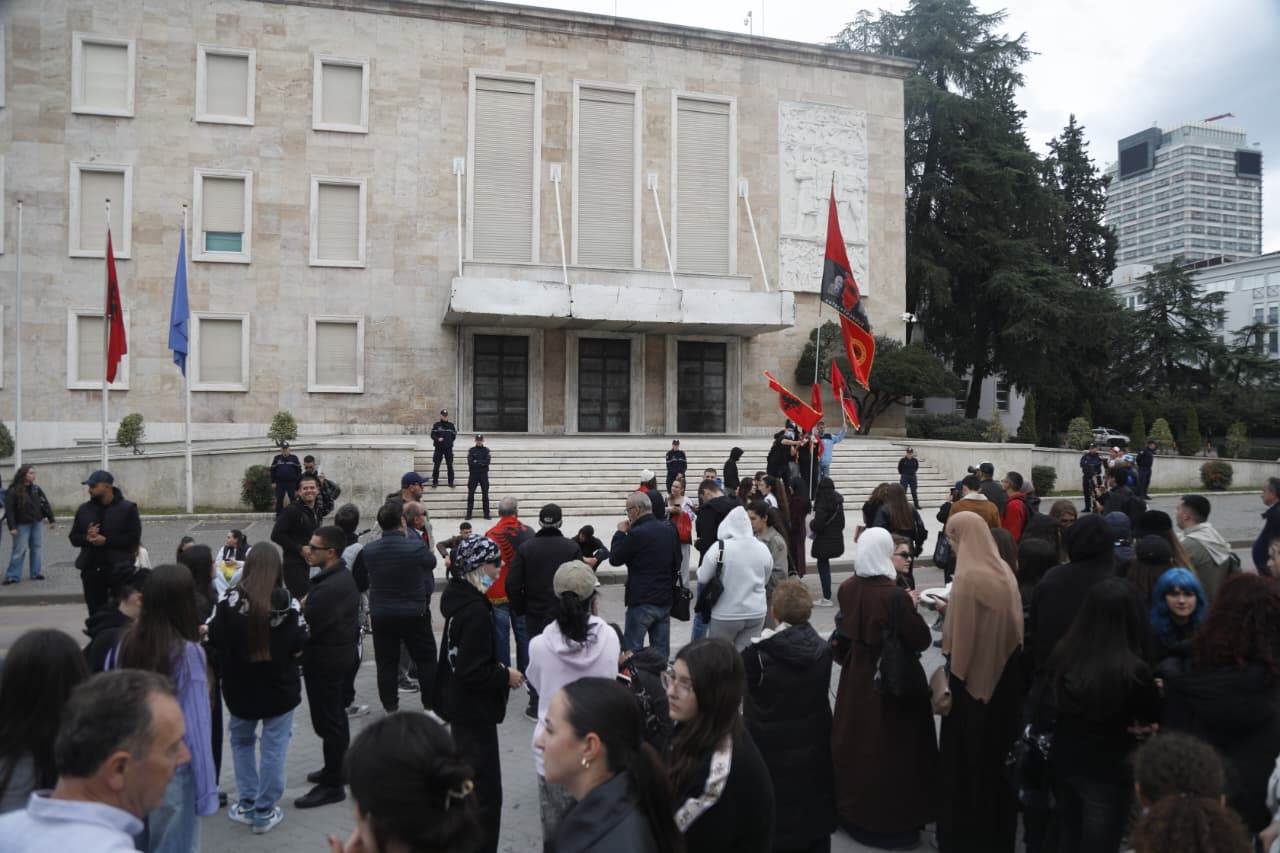
Police apply the normative act after the gathering in front of the Prime Minister’s Office
According to the official announcement, 16 reports for administrative violations were completed in implementation of the normative act on assemblies and violence in protest, presented by the government as an anti-violence package.
The measures are linked to the protest held on the “Dëshmorët e Kombit” boulevard, in front of the Prime Minister’s Office building, where authorities claim the protesters blocked the road and obstructed the movement of vehicles.
5,000 lek fine for each of the 16 protesters
According to Police, each of the 16 individuals was given an administrative fine of 5,000 lek.
Of these measures, 14 were imposed on people escorted by Police, while 2 others, according to the authorities, were based on identification from video footage.
Official claim: they did not comply with calls to clear the road
The official version says that during the gathering, repeated calls were made by Police officers through a megaphone to clear the road, but the sanctioned individuals did not comply with those orders.
At the center of the intervention remains the implementation of a normative act that has raised questions about the relationship between public order and the right to assemble, while the administrative action came immediately after the protest.
Two minors in criminal proceedings
Beyond the fines, specialists from Police Station No. 2 referred materials to the Prosecutor’s Office to begin criminal proceedings against two minors.
According to Police, the incident is linked to November 2, 2026, during the gathering organized by students on “Dëshmorët e Kombit” boulevard, where both are suspected of having carried out unlawful acts, in cooperation with each other and while masked.
The procedural materials were sent to the Prosecutor’s Office for further action.
The case marks one of the first concrete uses of the normative act on assemblies, with administrative and criminal consequences that are expected to fuel debate over the limits of state intervention in public protest.