
Prime Minister Edi Rama has announced the launch of a new political scheme called “Loyal Presence,” which according to him will take place every Friday at 17:00 across the country. The initiative is presented as a hearing with citizens, but the way it was introduced also suggested an attempt to regulate the relationship between the party, MPs and the administration, at a moment when the head of government himself publicly acknowledged distortions known for years.
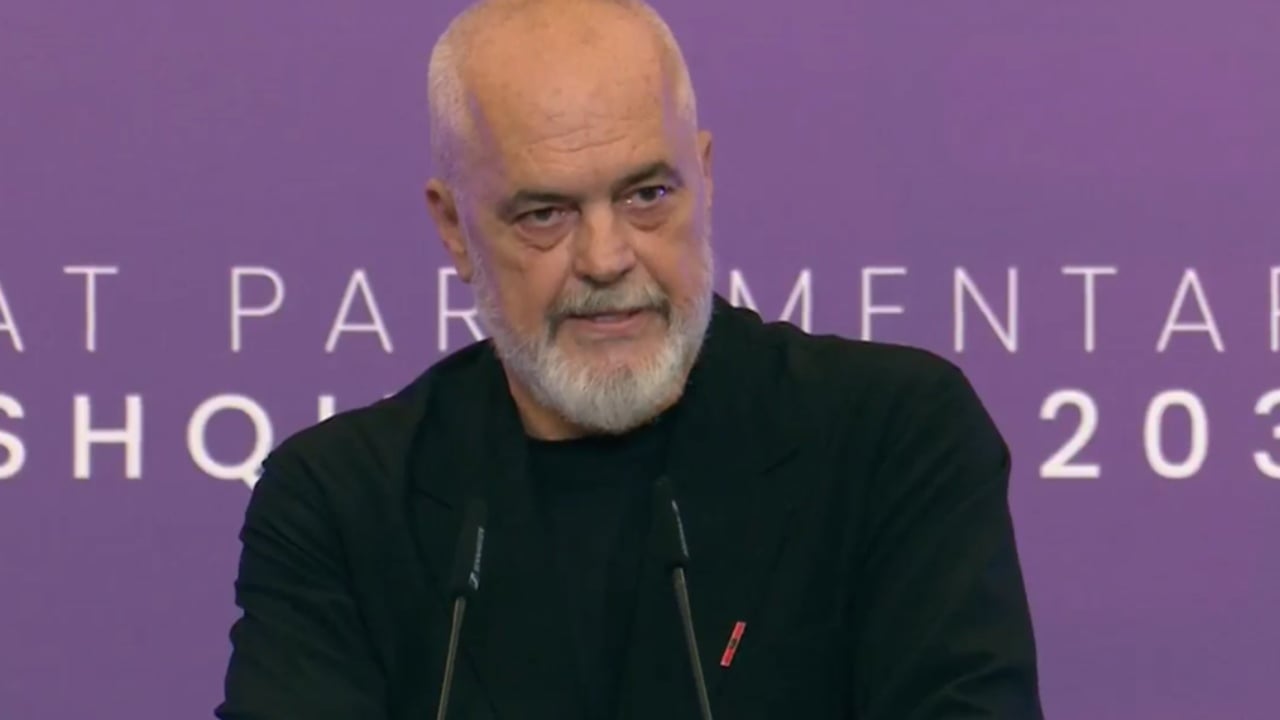
A weekly mechanism announced by the head of government
According to the version made public by Rama, the process starts this Friday and will be repeated every week at the same time. He described it as an ongoing hearing with citizens that will continue for as long as he remains at the head of the Socialist Party.
In essence, the initiative is presented as an organized presence of MPs and political structures on the ground. But the fact that it is announced by the prime minister and directly linked to the party once again raises the familiar question of whether the line between the state and the party is really being clarified or merely reformulated under a new name.
The message to MPs: no favors, no phone calls to directors
Rama said MPs should not use their function to ask favors of the heads of institutions. According to him, the focus should be on citizens’ real problems and referring them to the responsible institutions.
This is an indirect admission that the practice of informal interventions has been so present that it now requires public disciplining from the top of power. When the prime minister is forced to clarify that an MP should not call a director for “favors,” the problem does not appear to be merely theoretical.
‘The party does not become the state,’ but the alarm comes from the government itself
In his remarks, Rama insisted that the party should not turn into an employment counter and that a militant cannot be the citizen’s route to obtain a right that belongs to them by law. He said politics should be an “antenna for a listening state” and not a parallel channel for a state that does not function.
The statement sounds like a distancing from a model that has long been denounced in the administration and in relations with citizens. But it remains unclear what concrete mechanisms will separate this initiative from the political intervention that Rama himself says must be restrained.
The most direct admission: in the administration there are people ‘with WhatsApp’
The most meaningful part of the statement came when Rama said that in the administration there are “plenty of people who are there on merit” and “plenty of people who are there with WhatsApp.” With this wording, he publicly acknowledged the existence of a scheme of informal influence in employment or decision-making, an accusation that the opposition and the public have voiced for years.
According to him, this must change. However, the statement raises a bigger question than the Friday initiative itself: if the problem is so well known at the top of government, why is it acknowledged only in rhetorical form and not with clear institutional accountability.
The new initiative is being sold as a bridge between the citizen and institutions, but the very way it was presented showed that the real concern remains the functioning of the state under the shadow of political interventions.
Instead of a success declared in advance, the weight of this scheme will be measured by a more concrete test: whether the citizen will get solutions through the law and the institution, or only a new format of party contact.