
Prime Minister Edi Rama linked the deadlock in reconstruction in Tirana to the blow dealt to the leadership of the Municipality, calling the situation a failed “social, legal, political, economic experiment.” In his version, the heaviest consequences are being borne by families still waiting for homes after the earthquake.
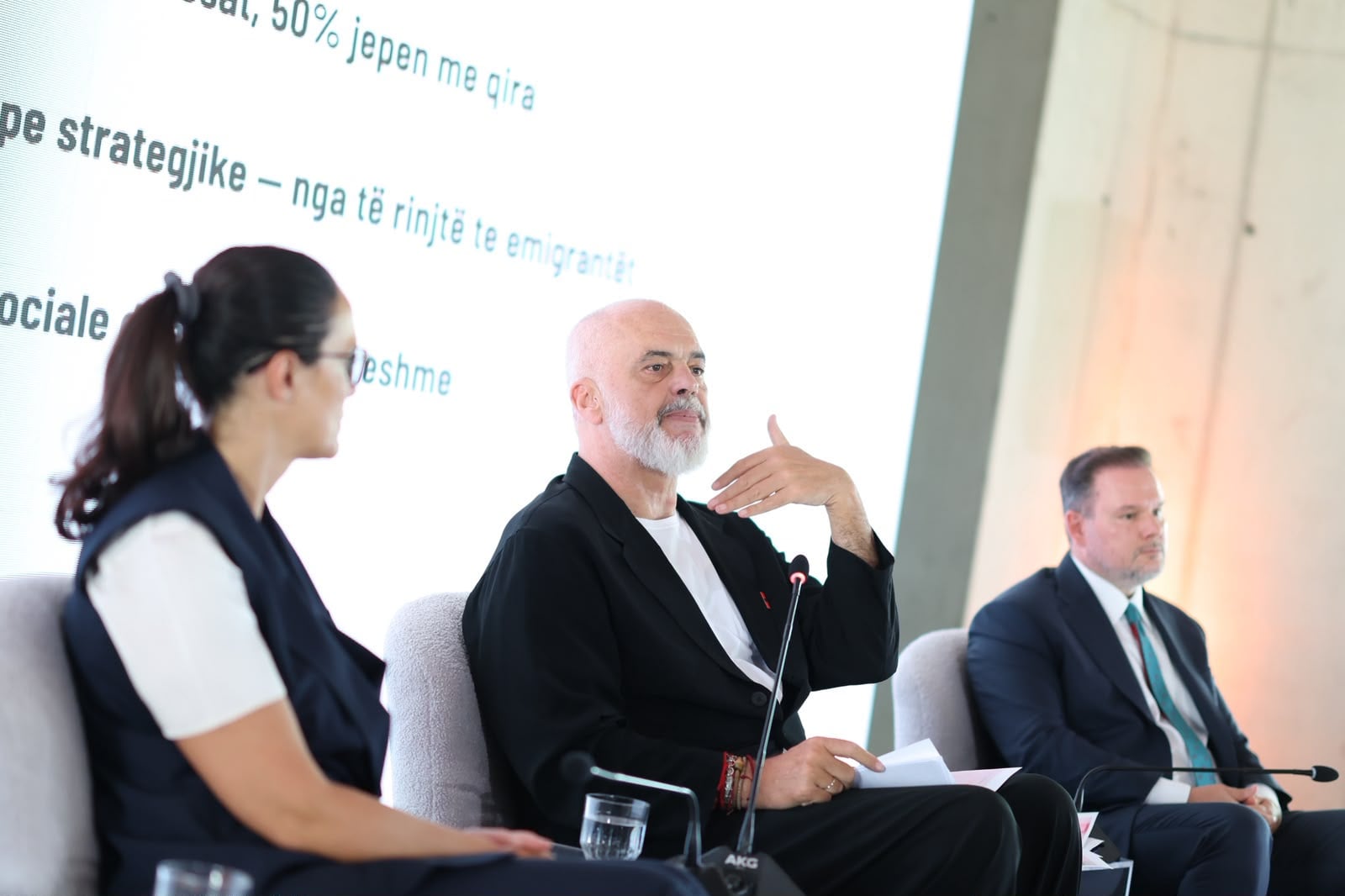
Rama presents the blockage as a result of the lack of leadership
During his statement, Rama said that leaving the capital “headless” has brought direct consequences for the administration of the Municipality of Tirana and for the pace of the reconstruction process.
He claimed that the arrest and the running of the municipality from prison have caused delays in closing one of the most debated post-earthquake processes, placing responsibility on the interruption of the institution’s political and administrative leadership.
Focus on the problematic reconstruction areas
According to Rama, the government aims to finalize “very soon” the plan to put an end to what he described as the most unjustifiable story of delays in reconstruction.
He specifically mentioned the areas from Kombinat to 5 Maji, two of the most sensitive points in this process, where the wait for the handover of homes has remained one of the most visible social and political wounds.
Accusations over an “experiment” with social consequences
Rama used harsh tones toward the situation created in the capital, calling the running of Tirana without a mayor a serious experiment and, according to him, a complete failure.
At the center of this argument, he placed the families affected by the earthquake, who are still waiting for the keys to their apartments. According to the prime minister’s version, these families are the most innocent victims of the crisis created at the top of the municipality.
Comparisons with European standards
In his statement, Rama said this is an unheard-of “interruption” in the history of European Union countries and of those that are part of the Council of Europe.
He also mentioned two cases in Strasbourg, claiming that Albania’s case is more serious than the precedents he referred to, without giving further details in this statement.
Rama’s statement shifts the debate from the concrete responsibilities for the dragging out of reconstruction to the clash over the leadership of the Municipality of Tirana.
But for the families who have been waiting for years for a solution, the core issue remains the same: the homes have still not been delivered, and the cost of the delays continues to fall on them, regardless of the political justifications.