
The parliamentary session was marked by harsh tones and direct accusations from the head of the PD parliamentary group, Gazment Bardhi, who targeted Deputy Prime Minister Belinda Balluku. Claims about wealth were raised in the chamber and SPAK was also mentioned, as the debate quickly took the form of a typical political clash with strong public resonance.
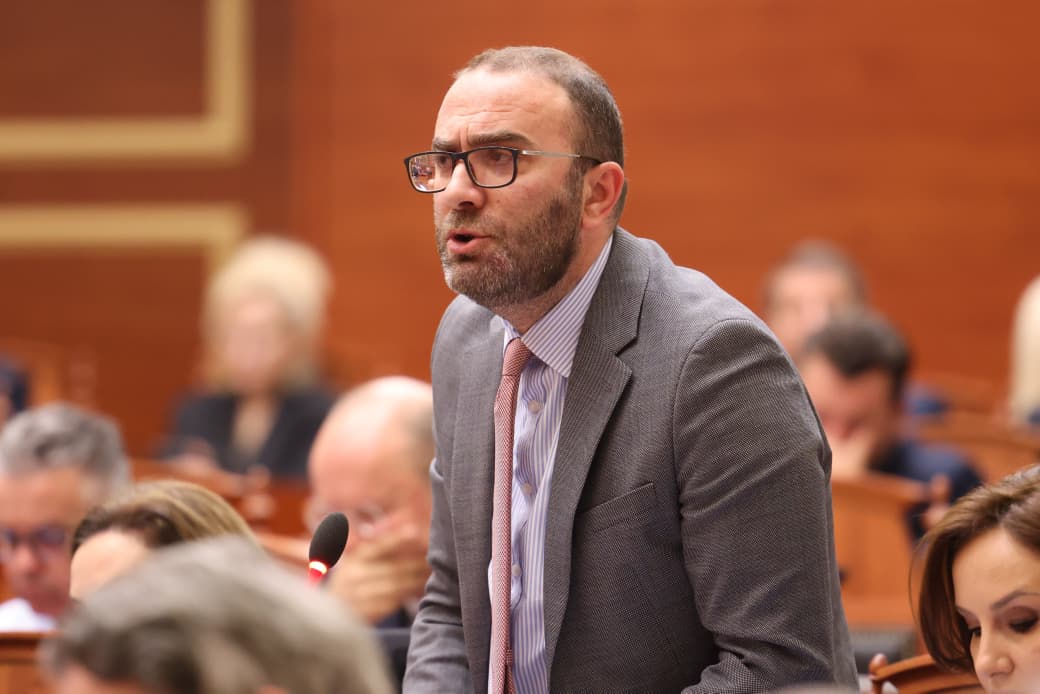
Direct accusations from the Parliament podium
Bardhi addressed Prime Minister Edi Rama with questions and political accusations against Balluku, saying that she had previously been presented as a figure untouched by corruption, but that later, according to him, two villas linked to her had been uncovered.
At the core of his intervention was strong opposition to the political protection the majority gives its officials, a line the opposition has often used in Parliament when raising suspicions about wealth and ties to corruption.
What Bardhi said about Balluku and SPAK
In the chamber, Bardhi raised the question of where Balluku was and mentioned two properties, also hinting at the possibility of a seizure by SPAK. These were accusations and questions framed politically from the Parliament podium, without being accompanied by new documents during the parliamentary debate.
He specifically mentioned Drimadhë and Palasa, while his attack also extended to the prime minister himself, whom he accused of recognizing only the “state of the private courtyard.” The rhetoric used pushed the debate beyond an ordinary parliamentary exchange.
Political clash, not institutional clarification
The debate in Parliament produced more political noise than public clarification about the claims raised in the chamber. In such cases, the weight of the accusations remains high in public opinion, but so too does the standard of proof, especially when wealth, corruption, and special structures such as SPAK are mentioned.
For the moment, from what was said in the session, this is a strong political accusation articulated by the opposition against one of the government’s main figures. Institutions do not appear to have provided clarification in the same debate regarding the claims raised.
The latest clash in Parliament once again brings into focus the relationship between political accusation and institutional responsibility to publicly clarify any suspicion related to the wealth of senior officials.
When allegations of corruption and property are raised in Parliament, the public expects more than rhetoric: it expects answers, transparency, and verification.