
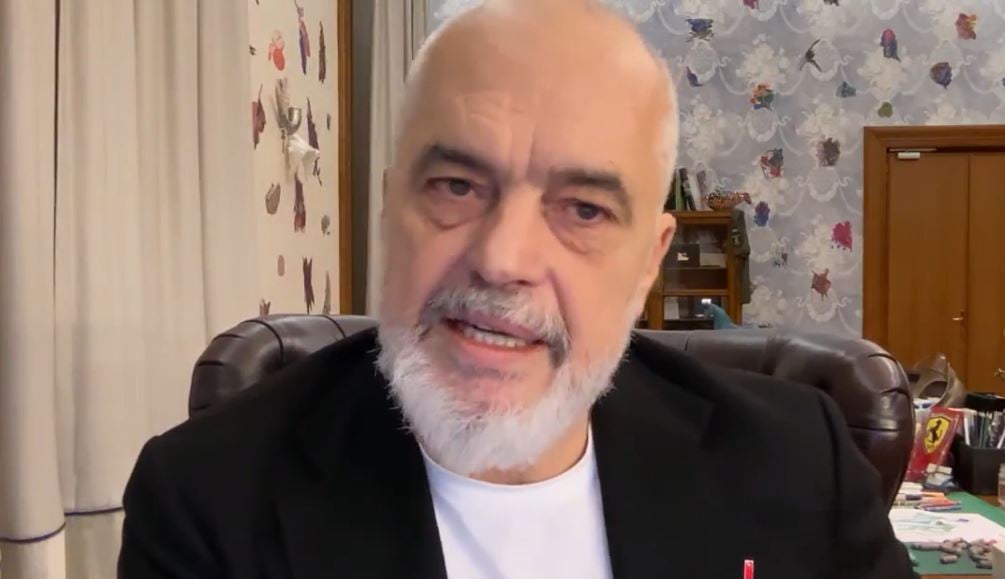
Prime Minister Edi Rama combined a call for dialogue with harsh language toward those who, according to his version of events, appear at protests with stones and masks. In the statement made public, he said the state would not surrender in the face of violence and invited citizens seeking communication to meet him at the Prime Minister’s Office, at a faculty, or in another format.
Dialogue offered from above, with a red line on violence
Rama said he is ready to talk with anyone seeking dialogue, whether at the Prime Minister’s Office or in university settings. His message was twofold: on the one hand, an invitation to communicate; on the other, a warning that the state will not retreat in the face of violent acts.
No further paragraphs were mentioned, but the essence of the statement was that the government is seeking to distinguish between protesters who want to be heard and those who, according to it, use clashes and intimidation in the streets.
Message to young people at the protest
The prime minister addressed in particular the young people who, according to him, remain at the protest without any intention of throwing stones. He claimed that the same gatherings also include masked individuals carrying hard objects, suggesting that they are distorting the nature of the protest and creating clashes that are then blamed on the police.
This is a political reading of the situation by the head of government himself, while the statement provided no other concrete elements for identifying the individuals he mentioned.
Warning to those appearing with masks
In the strongest part of the statement, Rama said that “the state does not surrender before stones” and that whoever sends “messages with stones and masks” will have the state facing them. With this wording, the prime minister presented the institutional response as a direct answer to any form of violence at the protest.
He also added that, in his view, what is happening will make Albania stronger. This remains a political thesis articulated by the government at a moment of tension, while public debate remains open over the line between order, the right to protest, and the way clashes on the ground are managed.
The statement comes in a climate in which the authorities are trying to maintain both a tone of dialogue and one of force at the same time. But how real the space for listening is when communication is accompanied by a political ultimatum remains the central question.
At its core, the government is seeking to draw the dividing line itself between protest it considers acceptable and protest it considers violent — a terrain where every word from those in power requires careful reading.