
Political tensions after the protest deepened further after Democratic Party leader Sali Berisha made direct accusations against the police and warned of the publication of a list with the names and photos of people who, according to him, used violence against protesters.
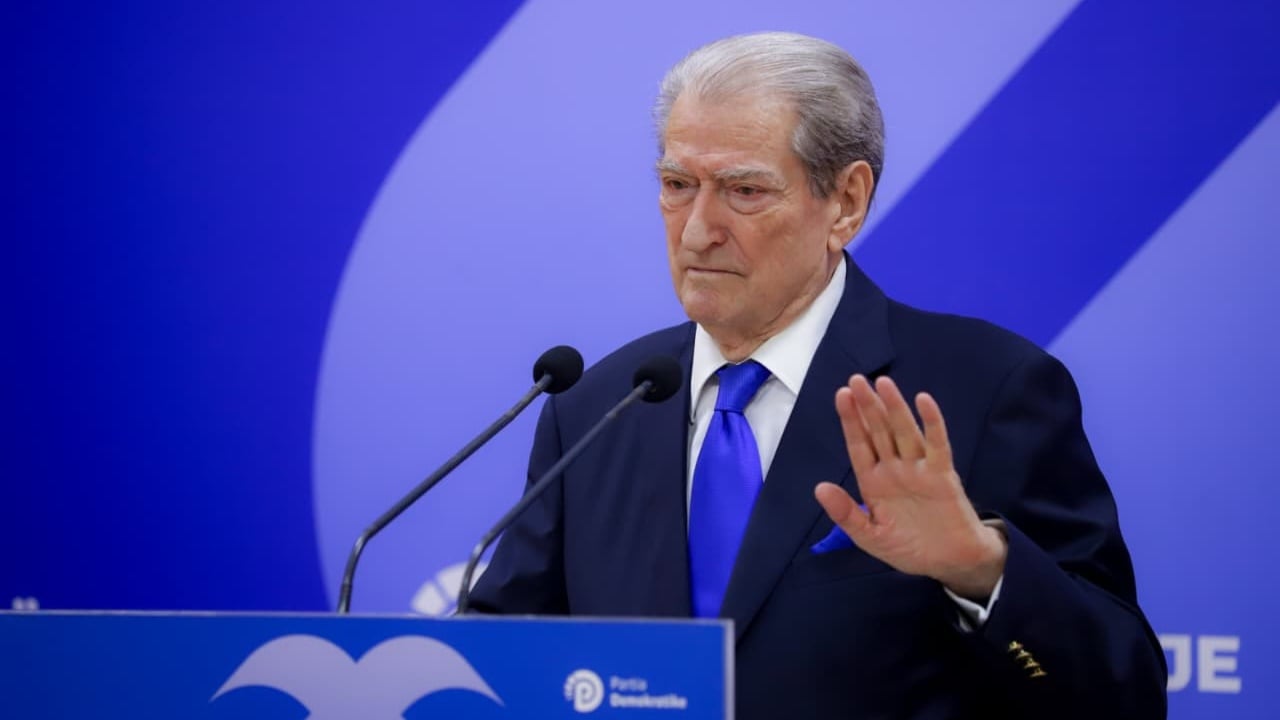
Direct accusations against the police
Berisha said the clash near the Prime Minister’s Office and the Ministry of Education was not started by the protesters, but by the police. According to his version, law enforcement officers initiated the violence at both points where the protest took place.
He rejected the claim that the tension was caused by the protest and insisted that police intervention was the factor that escalated the situation. Along the same lines, he said provocateurs had also been inserted on the ground.
Claims of provocation and deliberate damage
In his statement, Berisha alleged that people he described as provocateurs had damaged a business in order to pin the responsibility on the protesting students.
These claims were made by the DP leader as part of the opposition’s interpretation of what happened during the protest, while no additional evidence beyond the political accusations was presented in the cited statement.
Warning over the publication of names and photos
The strongest part of the statement concerned the warning that the names and photos of the people Berisha called responsible for the violence against protesters would be published.
He spoke of a “blacklist,” describing these people as mercenaries and provocateurs. Such a warning is expected to fuel new political and public debate because of the weight that exposing individuals carries in a highly tense climate.
Students at the center of the political message
Berisha presented the student protesters as resilient and determined, describing them as the main element in the confrontation with the government.
At the end of his statement, he turned the message into a political attack against the government, suggesting that the use of force against protesters is a sign of weakness rather than control of the situation.
The DP leader’s statement further adds to tensions over how the protest was managed and the role of the police on the ground.
At this stage, the accusations remain part of the opposition’s political version of the event, while public debate has shifted to responsibility for the start of the violence and the consequences that the publication of names and photos could bring.