
Another clash between Podgorica and Belgrade is shifting to the media sphere. The party of Montenegrin Prime Minister Milojko Spajić has requested a parliamentary investigation into ties between national television broadcasters and several Serbian companies, raising suspicions that these relationships may have been used for political influence and to distort public opinion.
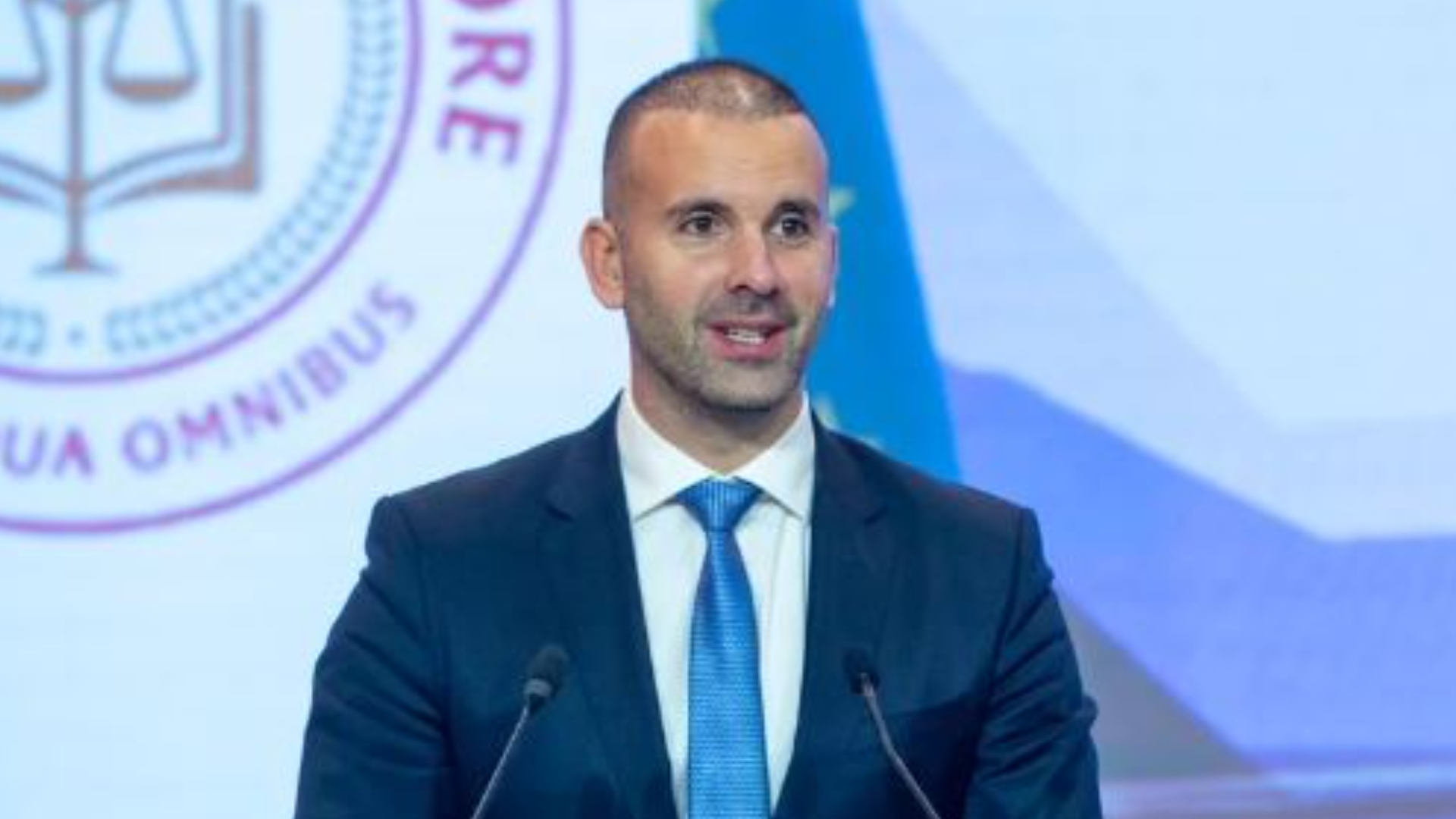
Request for investigation in Parliament
Europe Now Movement (PES), the political force led by Spajić, has asked Parliament to verify the financial, ownership and commercial relationships between national television broadcasters in Montenegro and the Serbian companies M-tel, Alta Bank and Alta Pay Group.
According to the submitted request, the investigation aims to clarify whether these links were used to influence television reporting, public opinion and political developments in the country. At its core, it concerns a serious suspicion: whether economic channels also served as instruments of political influence.
Spajić cites information from security services
The Montenegrin prime minister has said that recent developments, according to his version, reinforce the seriousness of the information held by Montenegrin services and their security partners. He had already warned at the end of August about a possible coordinated operation against Montenegro.
In a reaction on X, Spajić called on institutions to show, on the basis of facts, who protected state interests and who, according to him, relied on power centers outside the country while using unlawful mechanisms to undermine Montenegro’s stability and its European path.
M-tel, Alta Bank and Alta Pay Group in focus
A central part of the request concerns M-tel, a company operating in Montenegro since 2007 in telephony, internet and television. The company is part of Telekom Srbija, in which the Serbian state holds 58.11% of the shares.
The Alta group, linked to Serbian businessman Davor Macura, has also come under scrutiny. On October 14, he was barred from entering Montenegro after arriving at Podgorica airport. Authorities have not offered a broader explanation beyond that development, but the episode has increased institutional interest in the group.
What happened with Alta Bank
One element that has given more weight to the debate is the decision by the National Bank of Serbia on October 30 to revoke Alta Bank’s license, due to the deterioration of its financial condition and liquidity risk. Administration of the bank was transferred to the Deposit Insurance Agency.
On the other hand, the Central Bank of Montenegro has clarified that Alta Bank does not have a license to conduct banking activity on Montenegrin territory and that the decision taken in Serbia, according to the monetary authorities, does not pose a risk to the country’s banking system. In Podgorica, Alta Pay Group operates under a license granted in January 2024 for payments and money transfers, while authorities are verifying whether the entity continues to meet legal requirements.
Earlier suspicions of foreign influence
Spajić’s claims of foreign interference are not new. As early as August 27, he had spoken of a possible coordinated operation against Montenegro in which, according to him, officials from at least two countries in the region, as well as political and media actors inside the country, could be involved.
At this stage, the accusations remain at the level of political suspicions and institutional requests for verification. For precisely this reason, the investigation requested in Parliament is expected to be the real test in separating public claims from concrete evidence.
The case has opened a sensitive debate about the boundary between investment, media ownership and political influence in a country that places integration into the European Union at the center of its official discourse.
It remains to be seen whether Montenegrin institutions will produce verifiable facts beyond political statements, or whether the issue will remain part of the usual regional clash between security, media and power.