
Clashes at the latest protest on Tirana Boulevard have opened another political front, this time within the opposition camp itself. In a sharp public reaction, jurist Kreshnik Spahiu accused Sali Berisha and Democratic Party structures of trying to take control of the protest and extinguish any chance of an independent student organization.
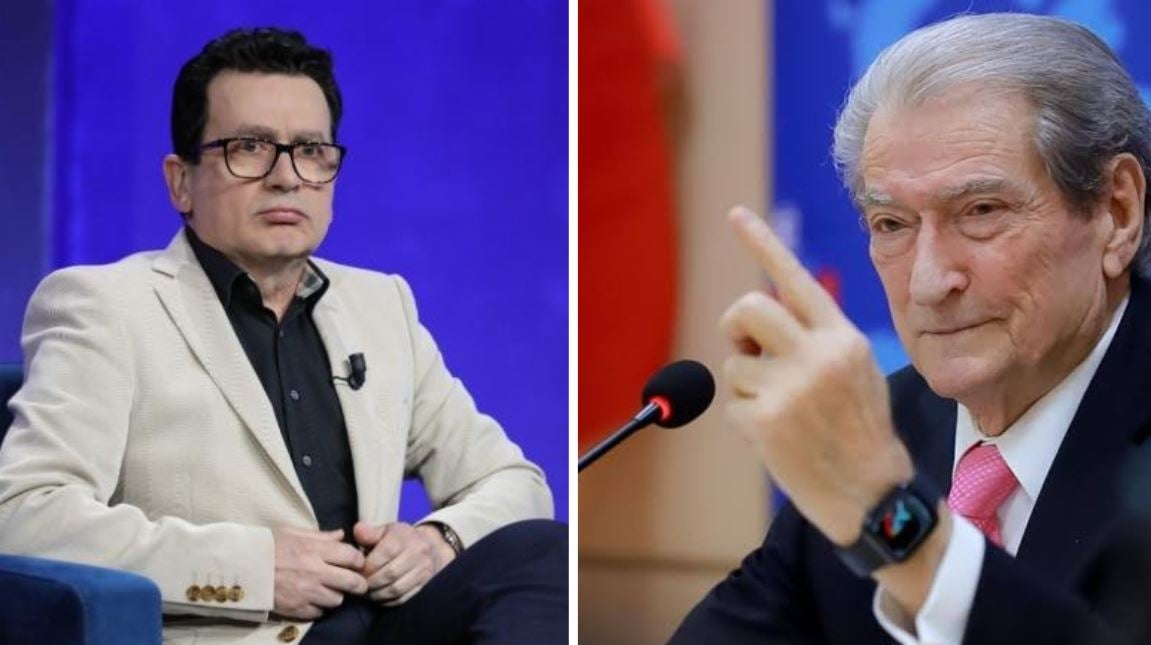
Strong accusations after tensions in the square
Spahiu directly linked the alleged violence against students to Berisha’s presence and influence at the protest. According to him, the head of the Democratic Party is not supporting an autonomous civic movement, but is instead trying either to appropriate it or to damage it politically.
In his statement, he used harsh language toward Berisha, claiming that people linked to the Democratic Party exerted pressure and violence against protesters who chanted slogans against both main political camps. These are political claims made publicly and are not accompanied by institutional verification in the text of the reaction.
The Democratic Party as an obstacle, not an ally
At the core of Spahiu’s reaction is the idea that the main obstacle for students is not only the government, but also the traditional opposition. He argues that the Democratic Party is obstructing the creation of an independent movement by pulling the protest into the usual logic of party control.
According to him, students are caught between two pressures: on the one hand, confrontation with the police, and on the other, according to his version, the intervention of political militants on the ground. This reading shifts the debate from the protest-government relationship to the clash over control of the protest.
Criticism also for the students’ own organization
Spahiu also did not spare criticism for the way the protest itself has unfolded. He says the number of participants was limited, that broad civic support is lacking, and that the use of violence as a political tool has driven away part of public opinion.
Another problem, according to him, is the lack of clear representation. He raises questions over the fact that the protest has no leaders or visible organizational structure, while claiming that some participants are political activists engaged with other opposition forces.
The political call: without Berisha’s departure, the government will not change either
At the end of his reaction, Spahiu takes the argument to a direct political conclusion: according to him, Sali Berisha’s departure from politics is a condition for any serious effort to challenge Edi Rama. He claims that, with the opposition fragmented and Berisha at its center, a change of power remains impossible.
Spahiu’s statement comes at a time when protests are being used by different actors to increase their political influence. That is precisely what makes the essential question even more sensitive: who is really protesting, for what, and in whose interest.
Beyond the strong political language, Spahiu’s reaction highlights the old crisis of protests in Albania: the difficulty of remaining civic once parties draw near.
So far, the debate opened after the clashes in the square has not produced full clarifications about what happened among protesters, the opposition, and the police, while the accusations are being used as weapons in a broader battle for political control.