
The tragedy in Elbasan, where two people lost their lives and 10 others were injured, has highlighted not only the grave consequences of the fire, but also serious questions over the response of state structures. In the Parliamentary Committee on Defense, the opposition spoke of an intervention that left much to be desired, while the head of Civil Emergencies, Haki Çako, admitted that in the first moments there were difficulties, panic, and a lack of experience.
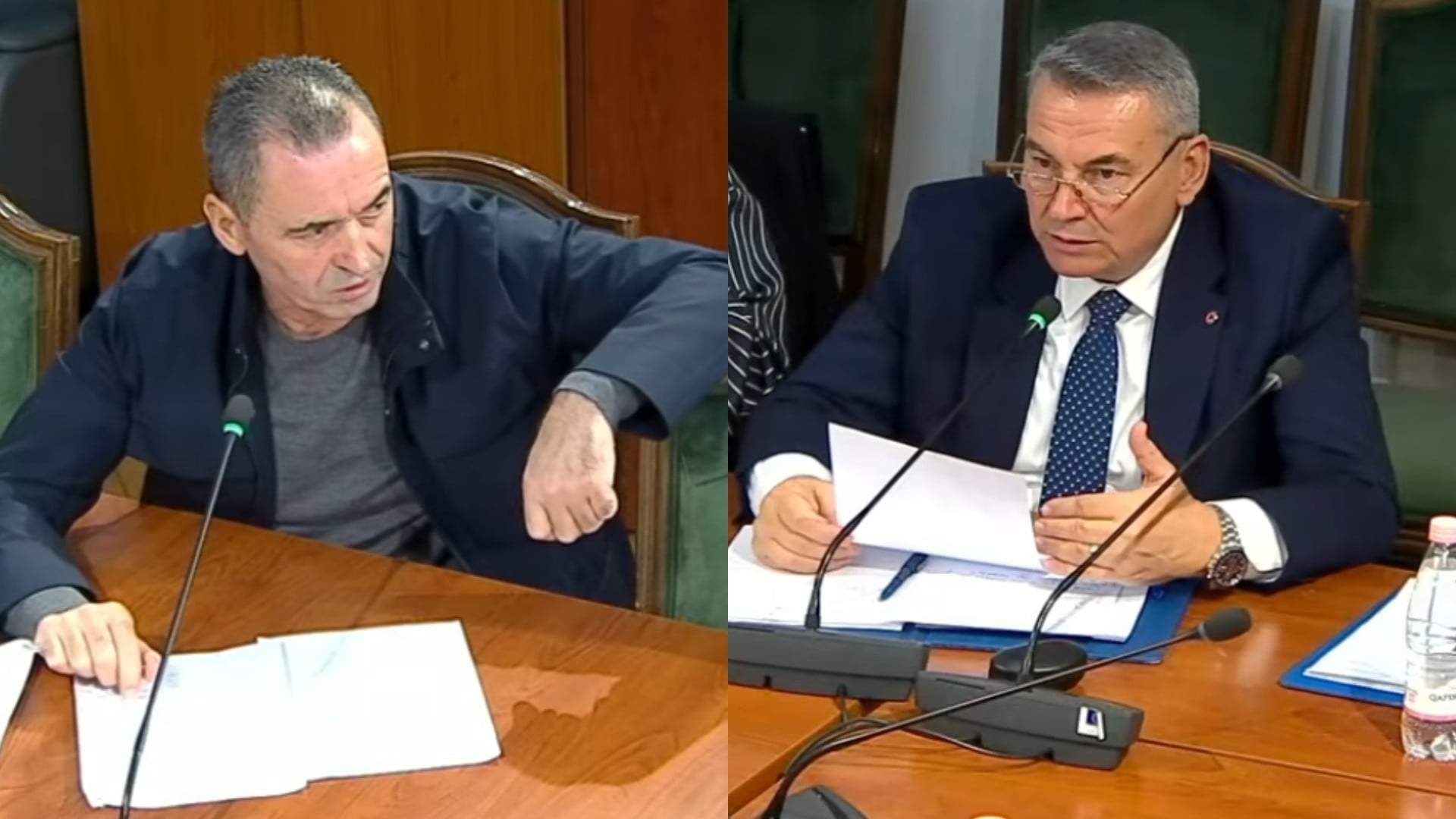
Clash in the Committee on Defense
The fire in the Elbasan apartment building became the subject of discussion in the Parliamentary Committee on Defense, where the debate focused on how the intervention at the scene was managed.
Opposition MP Isuf Çela sharply attacked the institutional response, presenting it as another sign of failure in handling situations with serious consequences.
Opposition criticism over equipment and response
According to Çela, the intervention to extinguish the flames was inappropriate for the scale of the incident. He said the fire was being put out “with a water hose,” while comparing this with the vehicles used at protests to spray water under pressure over long distances.
The MP’s comparison was intended to highlight what he said was a disproportion between the capacities activated for crowd control and those seen at an incident with victims in a residential building.
Çako admits problems in the first moments
In response, Haki Çako admitted that the first phase of the intervention had been accompanied by difficulties. According to his account, a fire creates panic not only among citizens, but in certain cases also among the operational structures themselves.
He also said there had been a lack of experience in dealing with such an accident in the first moments, essentially acknowledging that the initial response had not been at the level required by the circumstances.
What Civil Emergencies said about the operation
Despite acknowledging the problems, Çako insisted that all available capacities had been engaged, including aerial ladder trucks from Tirana and Elbasan.
According to him, the Armed Forces’ search-and-rescue units and fire protection structures operated throughout the night, in an operation that, according to the institutions, was aimed at rescuing residents and managing the consequences of the incident.
The debate in the committee brought a sharp contrast to the surface: on the one hand criticism of a response seen as insufficient, and on the other the admission by the head of Civil Emergencies himself that there had been panic and a lack of experience.
For an incident that left behind victims and injured people, this remains a severe test for the public response mechanism, especially when failures are acknowledged only after the consequences have become irreversible.