
Former Defense Minister Fatmir Mediu emerged from the hearing at the Special Court Against Corruption and Organized Crime (GJKKO) disputing the charges brought against him in the Gërdec case. In his version, the testimony of a former associate and the explanations given in court undermine the core of the Special Prosecution’s position, especially regarding how the demolition area was selected and how the munitions were administered.
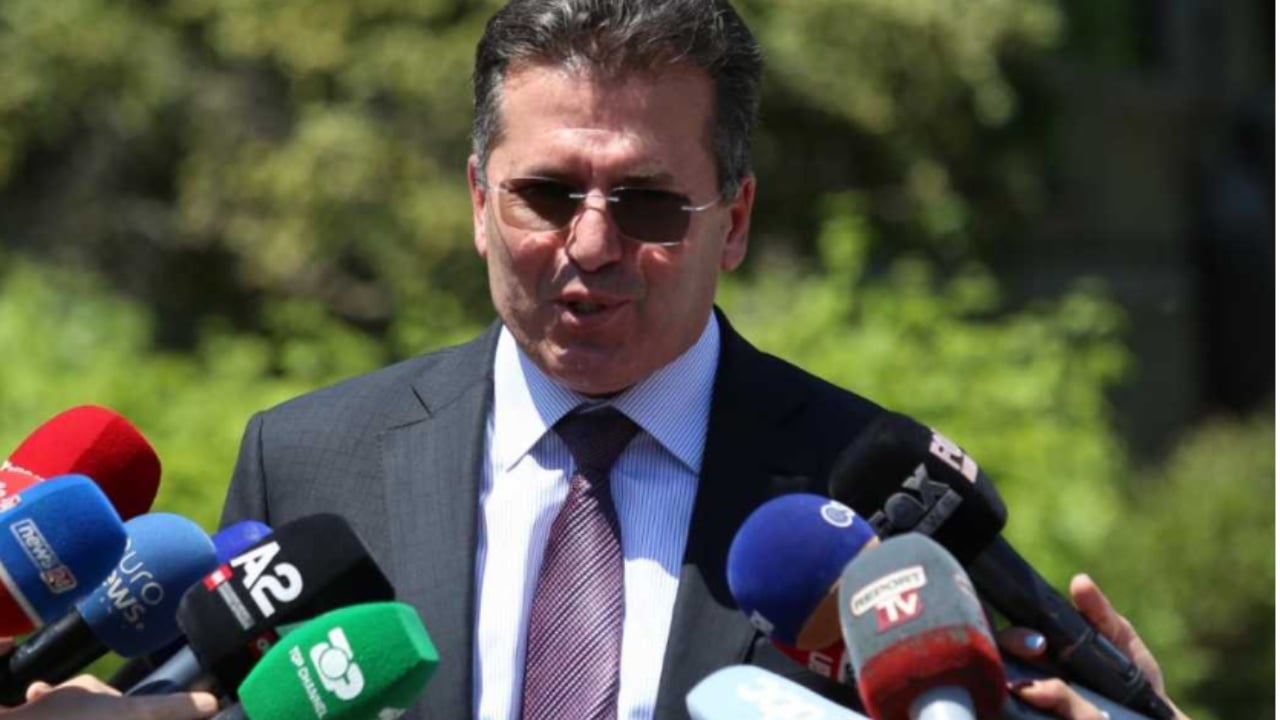
Mediu: Gërdec was designated before I became minister
According to Mediu’s statements after the hearing, the selection of Gërdec as the site for the dismantling of weapons and munitions was not made by him, but by military structures and the MEICO enterprise several years earlier.
He claimed the area had been designated as early as 2003 for the dismantling of tanks and artillery weapons, before he took over the leadership of the Ministry of Defense. In this way, the former minister is attempting to shift responsibility from political decision-making to the military and contractual chain of the time.
Clash with SPAK’s version
After the court testimony, Mediu argued that the statements given by his former associate undermine the accusations of the Special Prosecution. He insisted that key issues in the case file, in his view, do not support the claim that the main decisions were made by him as minister.
In essence, his defense is relying on the idea that the procedures and practices for Gërdec were inherited and known within state structures, not newly created by the political leadership of that time.
Debate over the classification of munitions
Another point on which Mediu focused was the way munitions were classified by caliber. According to him, the testimony of the deputy chief of the General Staff shows that there was no legal act, regulation, or manual defining the administration of munitions on the basis of size or caliber.
He also claimed that the handling of small-caliber munitions over 100 mm was an existing practice even before his appointment. This is another argument with which the former minister is trying to challenge personal responsibility in the chain of decision-making.
Claim on transport: the army carried it out, command calculated the costs
On another element of the case file, that of payments for the transport of munitions, Mediu gave an explanation that runs counter to the suspicions raised by SPAK. According to him, transport was carried out by the army, while the calculation of costs was done by the command based on the minister’s orders that were in force during that period.
He added that the movement of munitions from the army to MEICO was done without payment, arguing that these were structures belonging to the same budget. This remains part of the debate being examined in court, where the former minister’s version is facing the interpretation of the prosecution.
The Gërdec case continues to remain one of the most sensitive files in Albanian justice, not only because of its tragic consequences, but also because of the unresolved questions over the chain of state responsibility.
Mediu’s statements after the hearing constitute his public defense, while their real weight will be tested against the evidence and the prosecution’s position in the courtroom.