
Another political clash has erupted over the country’s administrative map, after a draft proposed by majority lawmakers envisages the merging of 15 municipalities. The opposition strongly opposes the plan, claiming that this is not a genuine local government reform, but a political move aimed at redrawing the territory without consensus and without a convincing public process.
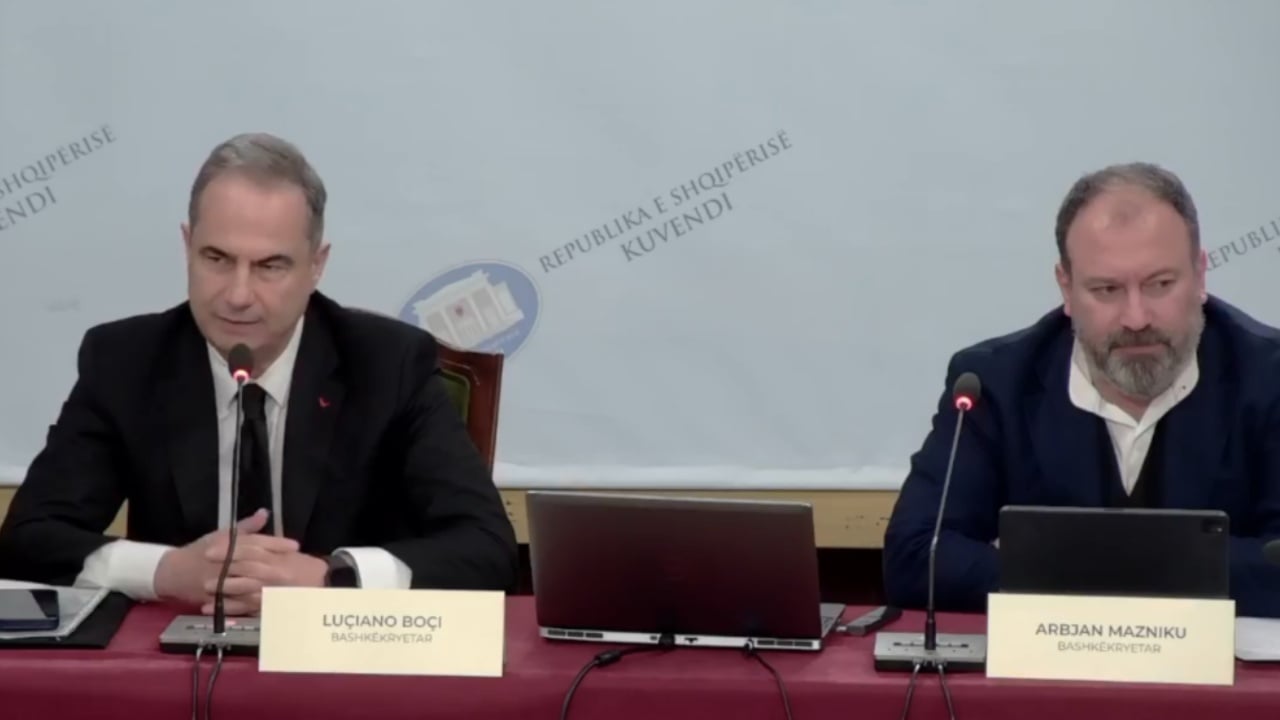
DP: the SP draft is not an institutional product
Democratic Party lawmaker and co-chair of the Territorial Reform Commission, Luçiano Boçi, described the draft proposed by the Socialist Party as a political rather than institutional document. According to him, the initiative was presented after the commission’s mandate had ended and without a joint report, vote or formal approval of the new map.
In the opposition’s version, the fact that the proposal was submitted only by majority lawmakers undermines the claim that it is the product of a normal institutional process. Boçi claims that the commission never made a decision on the map options and did not produce proper expert conclusions.
Debate over centralization and lack of analysis
The core of the DP’s objection is linked to reducing the number of municipalities from 61 to 46. According to Boçi, the draft presents no verifiable methodology, comparative analysis or financial arguments that would justify such a deep intervention in local organization.
He claims there is no evidence that larger municipalities will be more efficient, provide more services or reduce administrative costs. Along these lines, the opposition reads the project as a further push toward centralization, contrary to the logic of decentralization that, according to it, is required by European partners.
Questions over public consultation
Another major point of criticism concerns the consultation process. According to Boçi’s claims, the public hearings were formal and not representative, while the number of participants mentioned in the draft is not enough to present the process as a real national consultation.
The opposition also raises doubts that citizens’ positions were not reflected in the document and that the criteria used to retain or merge municipalities were applied selectively. According to it, this further weakens the majority’s claim of a reform based on objective standards.
Demand for referendum and call against the project
The DP is demanding that territorial changes not be approved without a referendum, referring to the need for broader legitimacy on an issue that directly affects territorial organization and local representation. Boçi argues that such a decision should not pass simply with the votes of the parliamentary majority.
The opposition’s rhetoric toward the draft has been harsh, describing it as a “political knife” against the territory and citizens. The clash shows that territorial reform is once again entering a zone of high political cost, where the lack of consensus risks turning the process into a pure power struggle.
So far, at the center of the debate is not only the number of municipalities that may remain, but also the way the decision-making itself is being built. And this is precisely where the opposition’s objection is focused: on the lack of a process that appears genuinely institutional, measurable and credible to the public.