
Prime Minister Edi Rama has placed before Socialist MPs and party structures a second document, titled “Faithful Presence”, as an addition to the “BESA” platform, while signaling a change in the way the country is governed. The message comes at a time when the government is facing public pressure and protests, while Rama himself is seeking to present this phase as a “vital transformation” for the ruling majority.
A new document for the Socialists
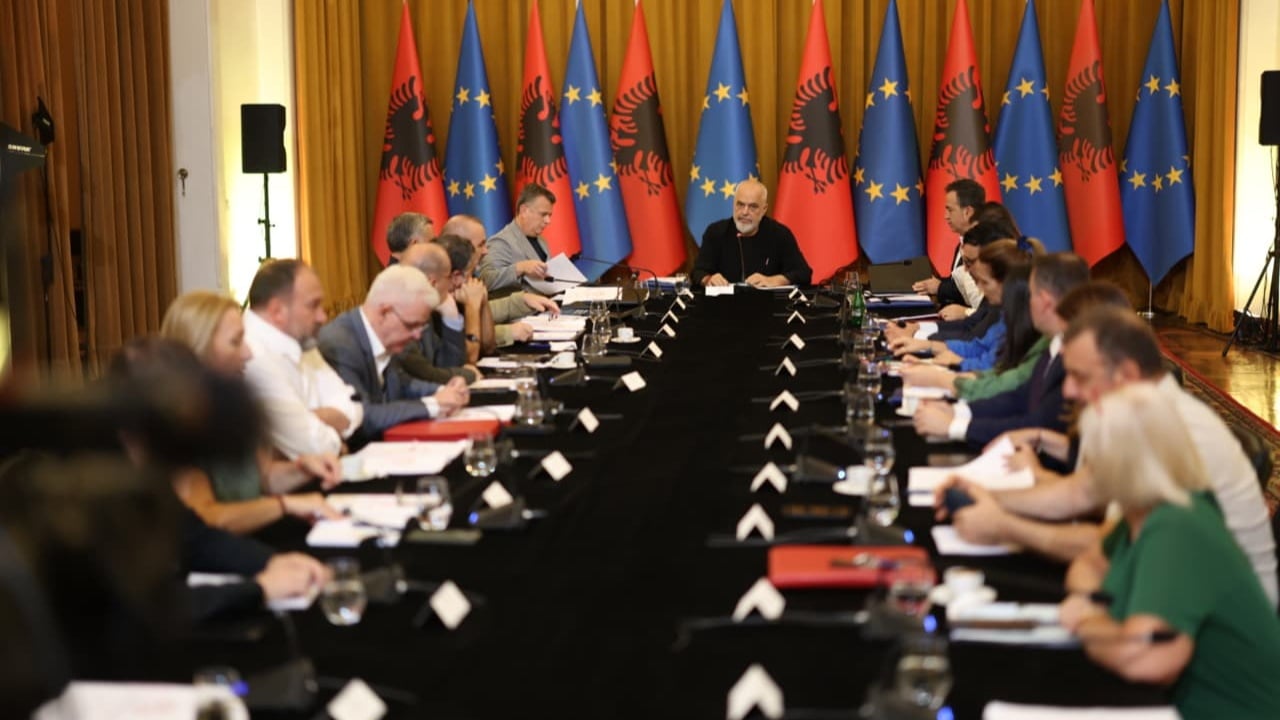
According to what was made public from the meeting with the Socialists, Rama placed the document “Faithful Presence” on the table of every MP, presenting it as an annex to the “BESA” platform. Along with the document, he also sent a political signal of change in the behavior of the government and Socialist Party structures toward citizens.
It was not articulated as an assessment of responsibilities for the government’s record so far, but as a call for a new turn. In essence, the head of government asked the cabinet and the Socialist political network to change the way they approach people, at a time when public expectations, according to him, have entered a different phase.
Rama speaks of a “human chapter”
In his remarks, Rama said the mandate should be a “strategic turning point” from a party that goes to citizens for votes to a party that stays close to them. He also indirectly acknowledged a long-standing problem of those in power in listening to citizens, underlining that changing this behavior is, in his view, a necessity.
In the prime minister’s version, “gratitude” is no longer enough as a political element and the majority must face a new reality of expectations. This language suggests that the majority itself recognizes the wearing out of a model of governance, even if without directly naming the political cost of that erosion.
Amid protests, Rama rules out resignation
Rama made clear that resignation is not in his plans. He also commented on the protesters who have been gathering for two months below the Prime Ministry building, claiming that they do not represent the people.
At the same time, he said that no one can speak in the name of the people, including the government itself. This position remains politically twofold: on the one hand, the representative legitimacy of the protest is rejected, while on the other hand it is acknowledged that an electoral mandate does not give anyone the right to identify with society as a whole.
The post-2029 mandate and the EU argument
Although he spoke of rotation as part of democratic life, Rama urged the Socialist Party to aim for governing trust even after 2029. According to him, the reason is tied neither to absolute superiority over opponents nor to the need to cling to power, but to the moment Albania is in.
The prime minister linked the continuation of his mission with the objective of placing the “flag in the EU,” repeating the idea that the door of the European Union does not remain open forever. This is an argument the majority often uses to justify continuity in power, even though European integration remains an institutional process that requires not only political rhetoric but also measurable standards in governance.
A warning about power that loses its hearing
Before the Socialist Party’s political leaders and the chairs of parliamentary committees, Rama also cited examples from international politics, saying that some rulers did not lose power from listening, but lost their hearing because of power.
The message was clear to his people: the problem is not only keeping power, but the way power produces detachment from reality. It remains to be seen whether this reflection will be accompanied by concrete changes in governing, or whether it will remain another political formulation within the majority.
Rama’s new move comes as an effort to reformat the majority’s narrative in a somewhat more difficult political climate. But beyond new documents and the vocabulary of “transformation,” the real test remains how the government will respond to criticism, protest, and demands for accountability.