
The meeting of Tirana’s Municipal Council, where the list of 1,500 beneficiaries for the loan interest subsidy program was approved, was politically dominated by another issue: the transfer of Erion Veliaj to Fier prison. Beyond the vote on housing, the debate shifted to the manner in which the mayor was sent there and to the reported conditions of his detention.
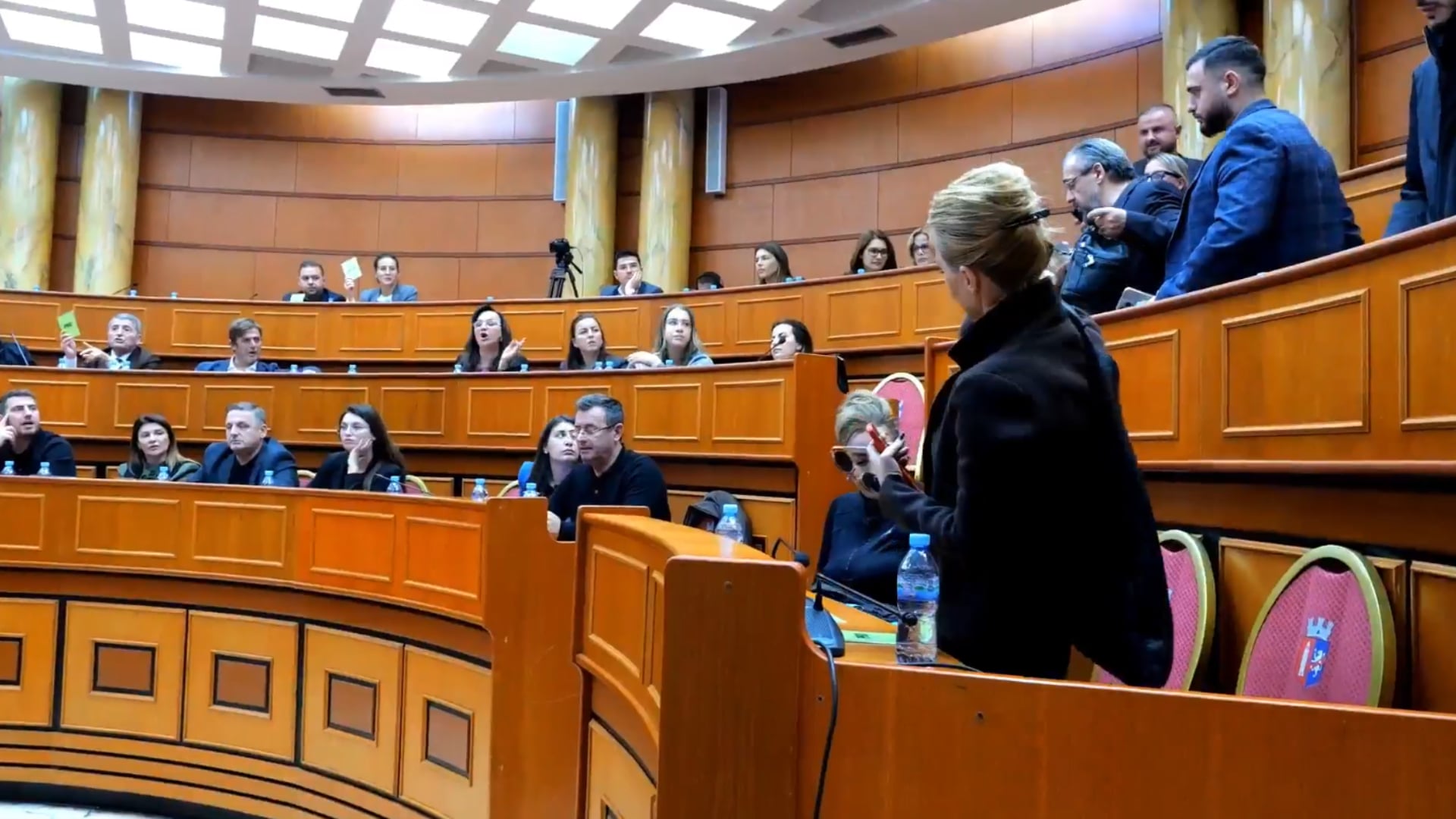
The soft loan meeting was overshadowed by political debate
The Municipal Council approved the list of 1,500 applicants declared winners in the social program “For the subsidization of loan interest,” through which interest on loans for the purchase of an apartment in Tirana will be covered by the state budget.
But the discussion in the chamber did not remain focused on the housing decision. Veliaj’s transfer to Fier led to sharp clashes among council members, with the opposition raising doubts about the way the transfer was carried out and demanding public explanations from the responsible institutions.
Opposition attacks the manner of the transfer
Ilda Zhulali linked the issue to a post by Veliaj on social media and claimed that the transfer was carried out without official documentation and in isolation. She used the case to attack the government, presenting the event as a sign of political and institutional pressure.
Dorian Teliti also said that his focus was not Veliaj’s personal fate, but the way in which, according to him, the institution of the Municipality of Tirana was treated. He asked that it be made known who made the decision on the transfer and why such an action was carried out in this manner, extending the debate to violence at protests, the housing issue, and student conditions.
Halit Valteri calls for verification of conditions in Fier
At the same meeting, Halit Valteri expressed concern over Veliaj’s sudden transfer and over the conditions in which, according to reports he cited, he is being held in Fier.
Valteri called for the issue to be discussed institutionally in the Municipal Council and said clarifications are needed from the Ministry of Justice and the prison system on the reasons for the transfer. He also mentioned concerns raised after the visit of the People’s Advocate, stressing that they require verification and intervention.
Call for transparency on the treatment of the pre-trial detainee
According to statements made at the meeting, Veliaj is in pre-trial detention and, as such, enjoys the presumption of innocence and constitutional rights. It was precisely on this basis that questions were raised about possible restrictions on meetings with family members, legal defense, and access to health care.
In the absence of a full public clarification from the responsible institutions, the debate in the Municipal Council showed that the transfer is not being seen only as Veliaj’s personal issue, but also as a test of the standard by which the penal administration operates toward a high-profile pre-trial detainee.
The political clash in the Municipal Council chamber pushed into the background the decision on the 1,500 soft loans and shifted attention to a larger question: are the necessary clarifications being provided when rights and procedures are affected in cases of public interest?
So far, the statements made at the meeting have added to the political noise, while official clarifications on the reasons for the transfer and the conditions of detention remain essential to separate fact from rhetoric.