
Prime Minister Edi Rama gathered ministers and the parliamentary group of the Socialist Party, placing at the center of his speech what he described as the three main problems of the state. Alongside a political diagnosis of the administration and the culture of institutional functioning, he also presented several new mechanisms that the government is putting forward as solutions.
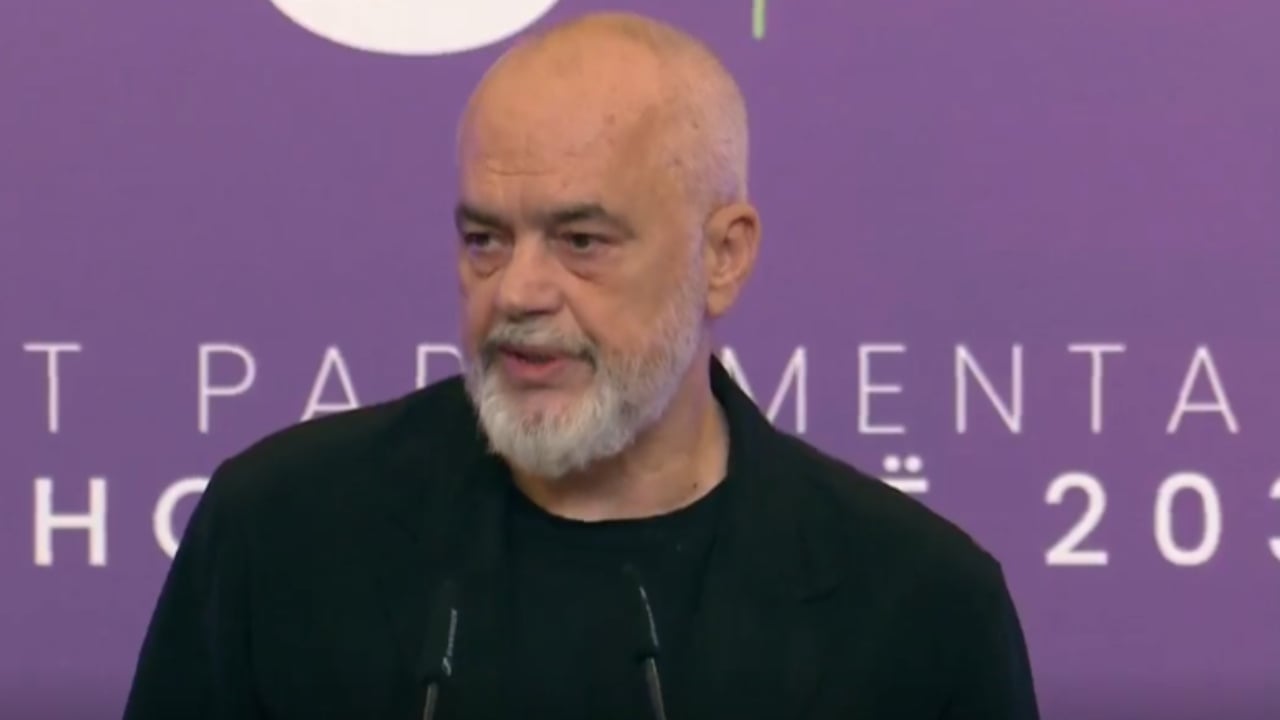
The three problems Rama calls the state’s “wounds”
At the meeting with the cabinet and Socialist MPs, Rama said the state faces “three wounds that feed each other.” According to him, the first is the “labyrinth state,” a phrase meant to describe the obstacles and complications citizens encounter when dealing with the administration.
The second problem, according to the version presented by the prime minister, is the lack of institutional memory. He argued that in the administration promises are made and words are spoken, but no complete register is kept of responsibilities for what has been done, not done, delayed, or changed along the way.
Merit, the law and the perception of favoritism
The third point raised by Rama is linked to the widespread belief that in Albania, connections may count for more than merit, while luck counts more than the law. The prime minister presented this as a direct problem affecting services and employment.
This is a political acknowledgment of a long-standing public perception of institutions, although from the government’s side it was not accompanied by a concrete balance sheet of responsibilities or clear examples of where the current system has failed.
What “Pasqyrë Albania” is
Rama also spoke about “Pasqyrë Albania,” “Besa,” and the “Scale of Merit,” which he presented as mechanisms to address these problems. According to him, “Pasqyrë Albania” will be a new space where the government will be present for citizens’ issues and problems.
He also said that, at a later stage, it would be desirable for the other two branches of power, the legislature and the judiciary, to be included in this space as well, but this, according to him, remains in the hands of those institutions themselves.
New mechanisms, but still without concrete details
Beyond the new names, the public presentation did not provide concrete details on how “Besa,” the “Scale of Merit,” and “Pasqyrë Albania” itself will function, nor on deadlines, responsibilities, or the measurement of results.
Politically, Rama’s message aims to show that the government sees the problem not only in procedures, but also in institutional culture. However, it remains to be seen whether these initiatives will produce real change in the administration, or whether they will remain another package of new labels for old problems.
The prime minister’s stated focus on bureaucracy, institutional memory and meritocracy comes at a time when citizens’ trust in public services and equality before the law remains one of the strongest tests of governance.
So far, the government has articulated the diagnosis and the names of the mechanisms; the real test will be transparency, implementation, and the ability to turn promises into institutional standards.