
One day after the political clash over Electoral Reform, the European Union ambassador in Tirana, Sofia Moreira de Sousa, sat down for a meeting with the co-chairs of the parliamentary commission, Damian Gjiknuri and Oerd Bylykbashi. According to the EU delegation’s statement, the discussion focused on tight deadlines, priorities and the inclusion of all parties in a process that for years has remained blocked by political interests.
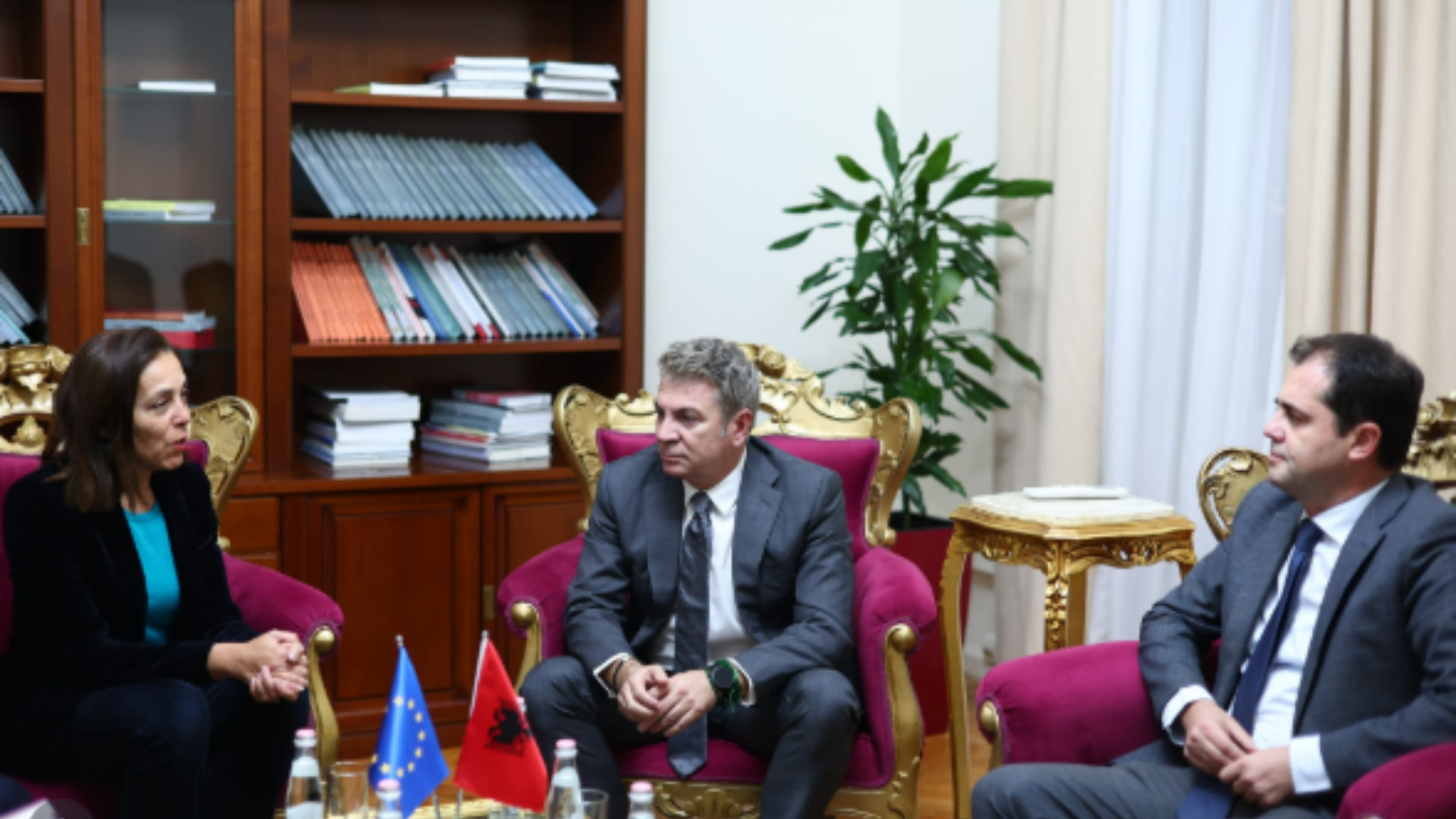
The meeting comes in a tense political climate
The EU ambassador’s move comes immediately after increased political pressure on the opposition over the progress of Electoral Reform. The meeting with Gjiknuri and Bylykbashi was the first in this format and signals that Brussels is keeping a close watch on a process that is usually activated under the rush of deadlines rather than on the basis of standards.
According to the official version, the parties discussed the very limited time available to the commission, as well as issues related to the scope of its work and the ranking of priorities.
The EU puts the emphasis on quality, not only the deadline
In her statement, Sofia Moreira de Sousa stressed that the quality of Electoral Reform is just as important as the timing of its completion. This is a message that can be read as a warning against any attempt to wrap up the process solely for the sake of the political calendar.
According to the ambassador, the reform is directly linked to public trust, fair competition and the integrity of elections, taking the discussion beyond the procedural formulas that parties usually use at the table.
Inclusiveness remains the commission’s real test
Another point underlined in the meeting was the need for the inclusion of all parties. In Albanian political practice, this is usually one of the most repeated promises and one of the most frequently undermined standards when the parties move from statements to concrete bargaining.
According to the EU statement, the conversation also touched on defining the commission’s priorities. This means it remains open which recommendations will actually be addressed and which may once again remain only on paper.
OSCE/ODIHR recommendations and the weight of political will
The EU ambassador recalled that the OSCE/ODIHR recommendations have long been clear and that the work done so far must produce concrete results. This is another indication that international partners see the problem not in the lack of technical formulas, but in implementation and political agreement.
In her statement, Moreira de Sousa said the process is achievable with political will and sincere dialogue from all sides. At a time when electoral reform has repeatedly turned into a field of pressure and calculation between the majority and the opposition, it remains to be seen whether this will goes beyond public statements.
Electoral Reform remains one of the most repeatedly tested and least concluded issues in Albanian politics. The EU ambassador’s meeting with the two commission co-chairs brings the focus back to standards, but without automatically resolving the usual deadlock between deadlines, party interest and the credibility of the process.