After more than a decade without new members, the European Union is bringing enlargement back to the table under pressure from geopolitical developments. In this climate, Edi Rama says Albania is in its “best moment,” but the real pace of accession continues to depend on debates and hesitation within the EU itself.
Enlargement returns as a strategic issue
After 13 years without admitting new countries, the EU is facing growing calls to reopen the enlargement process. The war in Ukraine and broader geopolitical tensions have pushed the bloc to view this process not only as a political and economic project, but also as a security instrument.
However, despite declarations of unity, dilemmas remain open within the union over its institutional and political readiness to include new members. This is precisely where the core of the debate lies: pro-enlargement rhetoric does not automatically translate into clear membership timelines.
Rama presents Albania as being in a favorable phase
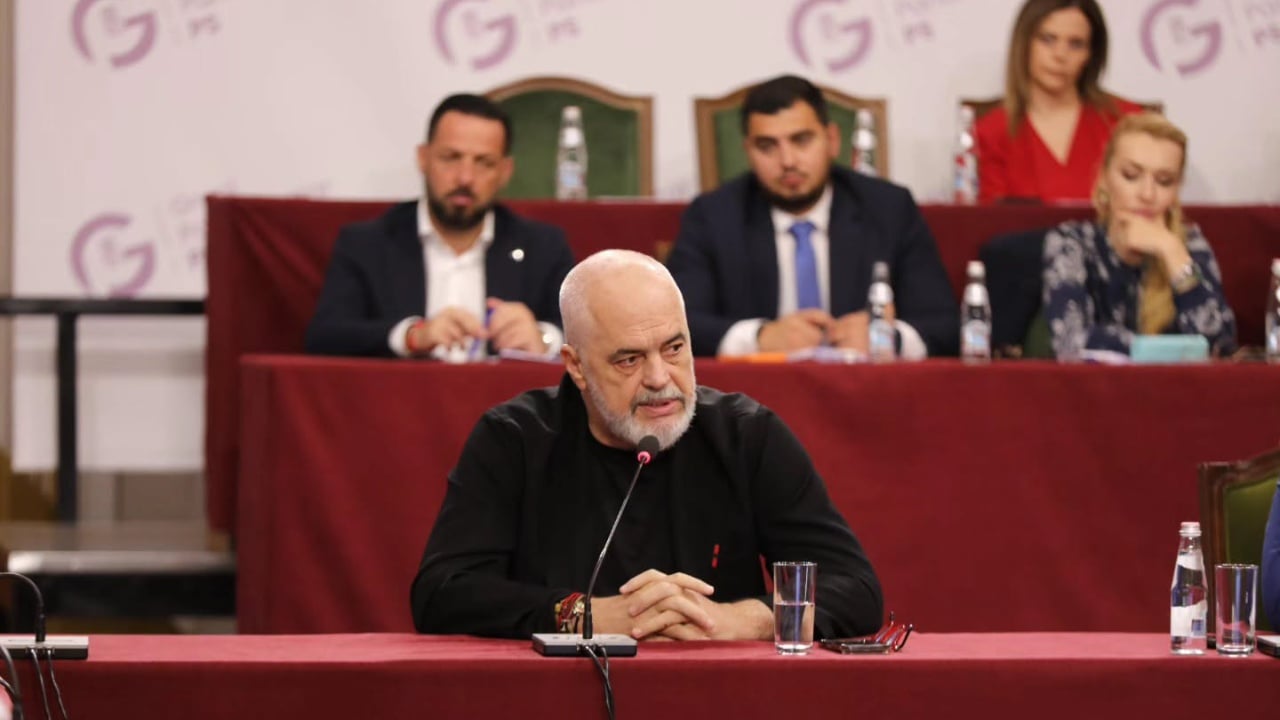
In a statement to the Financial Times, Prime Minister Edi Rama said Albania has a clear path toward the European Union and that the country is in its best moment in many respects.
This is the political version coming from the Albanian government, at a time when official Tirana is seeking to present the integration process as a story of progress. But beyond this optimism, the final decision-making remains in the hands of member states and EU institutions, where reservations about enlargement have not disappeared.
Candidates seek a faster pace, Brussels remains cautious
Candidate countries are pushing for more speed in negotiations, while some member-state governments continue to express concerns over whether the EU’s current structures and public opinion in their countries are ready for a new wave of enlargement.
Against this backdrop, a more gradual integration formula is also being discussed. But some candidate countries see this as a risk of creating a multi-tier Europe, where full membership could be postponed without a clear deadline.
Albania moves forward, but the region remains uneven
According to the current picture of the process, Montenegro is considered the country closest to membership, with more than half of the required reforms completed and steps underway in the legal and financial spheres as well. Meanwhile, Ukraine and Moldova have entered formal negotiations.
Albania ranks among the countries that have advanced in drawing closer to the EU, but the picture in the Western Balkans remains uneven. Serbia, North Macedonia, Bosnia and Herzegovina, and Kosovo have seen less progress in recent years, making the idea of rapid enlargement in the region even more complicated.
Promises of enlargement face political reality
Even within European circles there are concerns about the gap between public statements in favor of enlargement and the concrete reality of the process. According to this assessment, even the most advanced countries may still be several years away from full membership.
This means that, despite optimistic tones from Tirana and other candidate capitals, the road to the EU remains conditioned as much by the union’s political calculations as by the reforms of the aspiring countries themselves.
Albania may be in a better negotiating phase than a few years ago, but this is not enough to remove the uncertainties surrounding enlargement. Between geopolitical pressure and internal European hesitation, the process remains open, but not guaranteed.