
Prime Minister Edi Rama sought to give a political reading to the June protest during a meeting with the Socialist Party parliamentary group and the cabinet, calling the reaction on the boulevard not a sign of “ingratitude,” but a new measure for the standards of those in power.
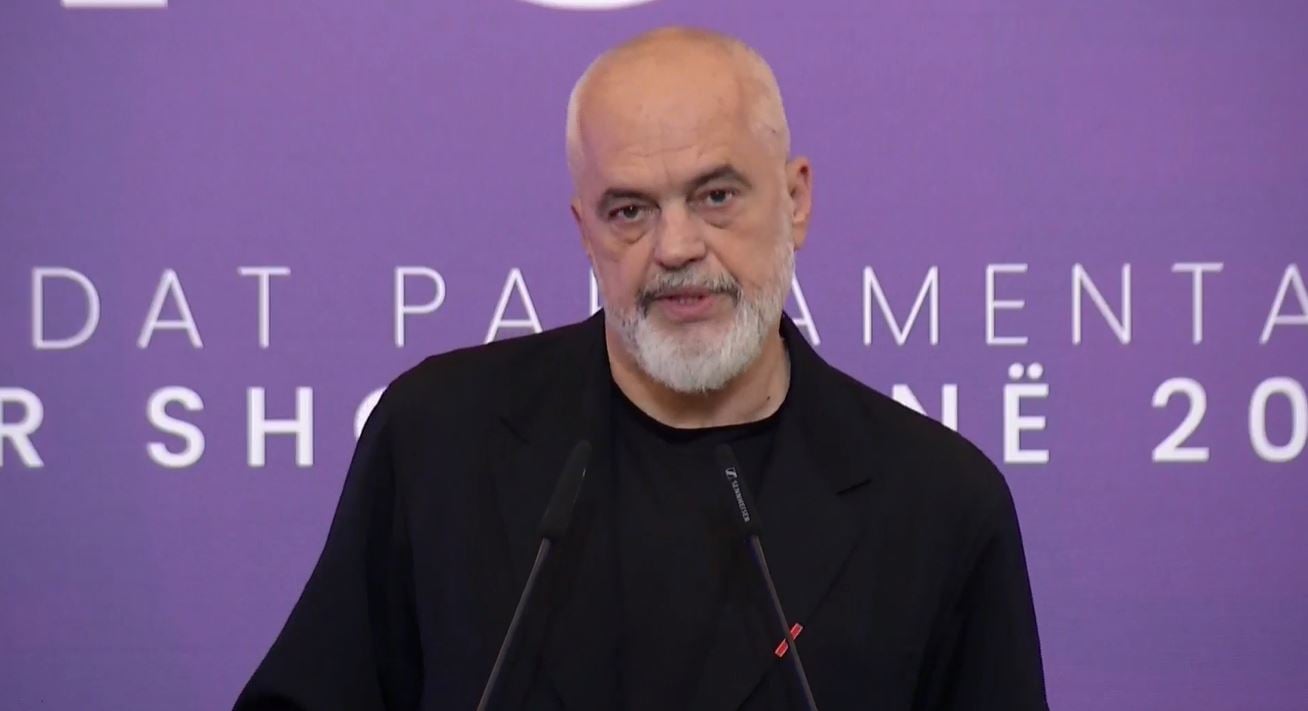
Rama changes tone on protesters
At the start of his remarks to the Socialists, Rama spoke about what he called the June panorama, when the boulevard, according to him, filled with people of different categories and ages.
He said that protesters against the mayor, as well as those who reacted in other ways after the elections, should not be seen as “ungrateful.” In the prime minister’s version, they represent a new standard against which the governing majority itself should be measured.
Two documents for the “turn” of the fourth mandate
Rama announced that he had brought two documents for discussion within the Socialist Party. The first, he said, is a strategic document for the turn that the fourth mandate must make; the second is an annex on how the Socialist Party should support that turn.
The documents were presented as part of a political reflection after the protest, although no concrete details were given about their content or about the changes being sought in practice.
Acknowledgment of dissatisfaction even within the PS base
In his statements, Rama acknowledged that voters, supporters and members of the Socialist Party had also come out onto the boulevard, including administration employees who, according to him, joined the protest in the afternoon.
This is a politically significant element, because it suggests that the dissatisfaction has not been read by the government itself only as opposition pressure, but also as a reaction affecting its traditional support.
The message the protest seeks to convey
According to Rama, people gathered in large numbers not because of party affiliation, but because they felt the need to send a stronger message.
This effort to translate the protest as a moral and political signal comes at a moment when those in power are trying to set the framework for interpreting public dissatisfaction themselves, without yet clarifying what concrete responsibilities this implies for governance and the administration.
Rama’s remarks place the June protest at the center of the Socialist Party’s internal debate, no longer as an isolated episode, but as an indication of a dissatisfaction that the majority is no longer able to easily ignore.
It remains to be seen whether the announced “turn” will produce real changes, or whether it will remain only a political relabeling of a crisis of confidence that has already openly appeared on the boulevard.