
Alternative for Germany, the far-right party that has gained weight in German politics, has long articulated a hard line against Kosovo and EU enlargement in the Balkans. Documents and public statements by its leaders show a course that, if turned into government policy in Berlin, would directly affect Pristina’s security and international position, as well as Tirana’s interests in the European process.
Call for the derecognition of Kosovo
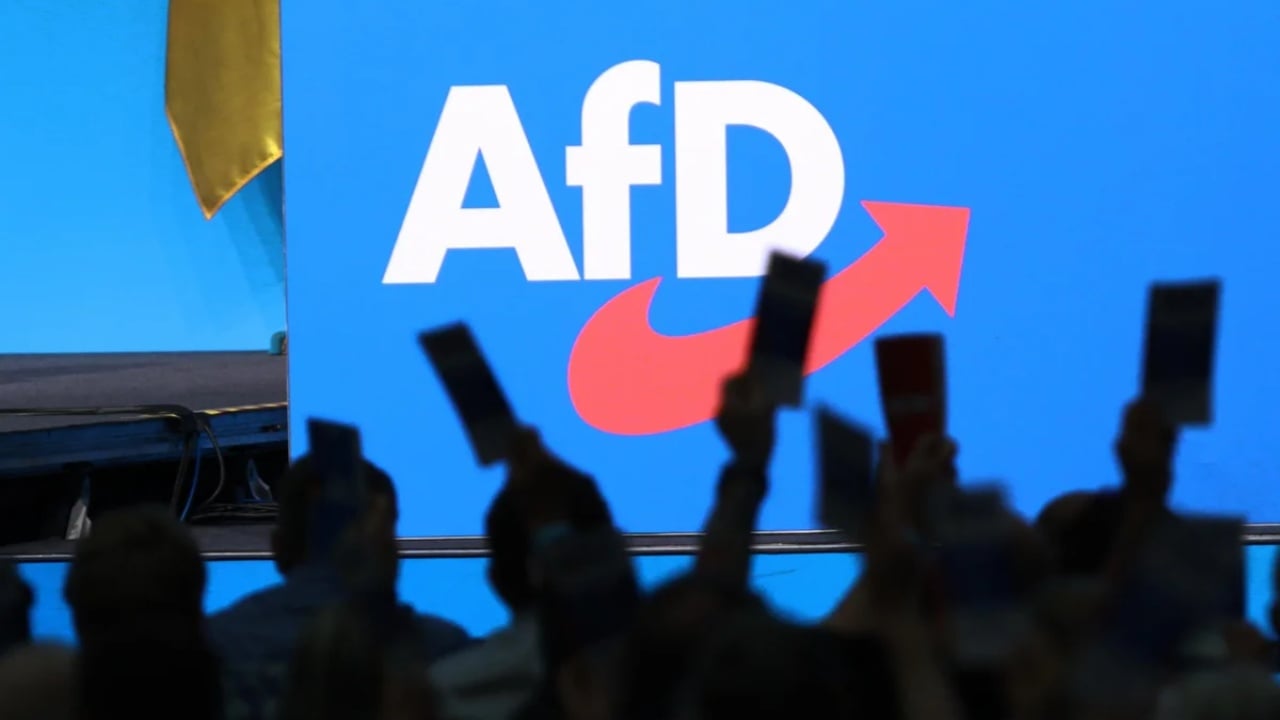
AfD’s most direct position on Kosovo emerged in January 2023, when the party’s parliamentary group called for Germany’s recognition of it to be revoked. At the time, Petr Bystron, then the party’s foreign policy spokesman, called Kosovo’s recognition a “mistake.”
According to documents and statements published by the party, AfD considers NATO’s 1999 intervention and Kosovo’s separation from Yugoslavia to be illegal. Along those lines, it has called on Berlin to apologize to Serbia for the bombings and to withdraw recognition of the state of Kosovo.
Parliamentary document in even harsher tones
In a parliamentary document from June 2023, signed by Alice Weidel and Tino Chrupalla, Kosovo is described by AfD as a “fake state.” In the same text, independence is presented as the result of an illegal war, while Albin Kurti’s government is linked to claims of a “Greater Albania.”
The document also calls for executive powers for the Association of Serb-Majority Municipalities and a form of extraterritorial administration for Serbian churches and monasteries, with guarantees from the UN. These positions bring the party notably closer to the demands Belgrade has articulated for years in relation to Kosovo.
No pressure on Serbia, no German troops in KFOR
AfD has called for Serbia not to be put under pressure either on the issue of Kosovo or on European sanctions against Russia. This initiative was rejected in the Bundestag in September 2024, but its content itself shows the political direction the party aims to impose.
In May 2023, MP Markus Frohnmaier declared that the “Kosovo project has failed” and called for Germany to leave KFOR, withdraw German soldiers, and end aid. In his statements, Kosovo was described as a corrupt, criminal country incapable of surviving without external support.
A threat also to EU enlargement in the region
AfD’s position does not stop with Kosovo. For years, the party has also opposed the accession of Western Balkan countries to the European Union. In a 2019 document, it argued that the entry of Albania, Kosovo, Serbia, Montenegro, North Macedonia, and Bosnia and Herzegovina would bring no “European added value.”
As an alternative, AfD proposed relations based on the model of Switzerland or Norway, without full membership. In 2023, this stance was hardened further, when enlargement toward the Western Balkans was described as “unrealistic” and a privileged partnership was requested instead of membership. In September 2019, the majority of AfD MPs voted against opening negotiations with Albania.
What this would mean for Pristina and Tirana
Germany remains one of the main supporters of Kosovo’s statehood, its security, and the European integration of the region. Precisely for this reason, AfD’s positions are not read simply as internal party rhetoric, but as a platform that would change the balance if translated into executive power.
For Pristina, the consequences would be direct: opposition to statehood, a weakening of KFOR’s role, and an end to German support. For Tirana, a government influenced by this line would call into question the backing of one of the EU’s most powerful states for enlargement in the Balkans.
Although AfD’s proposals have not become German state policy, the fact that they have been put into parliamentary documents and publicly defended by party leaders gives this line a weight that cannot be ignored.
For Kosovo and the region, the signal is clear: not every political development in major European centers is simply an internal matter of those countries. In such cases, the consequences can fall directly on security, international recognition, and the path toward the EU.