
Another major project in central Tirana is moving forward with the familiar language of urban ambition and international competitions. This time, it concerns the development of the area known as “Taiwan” in Rinia Park, where five proposals have been submitted by foreign architecture studios, while Prime Minister Edi Rama has chosen to respond publicly to criticism over how these interventions are being pushed in the city’s most sensitive spaces.
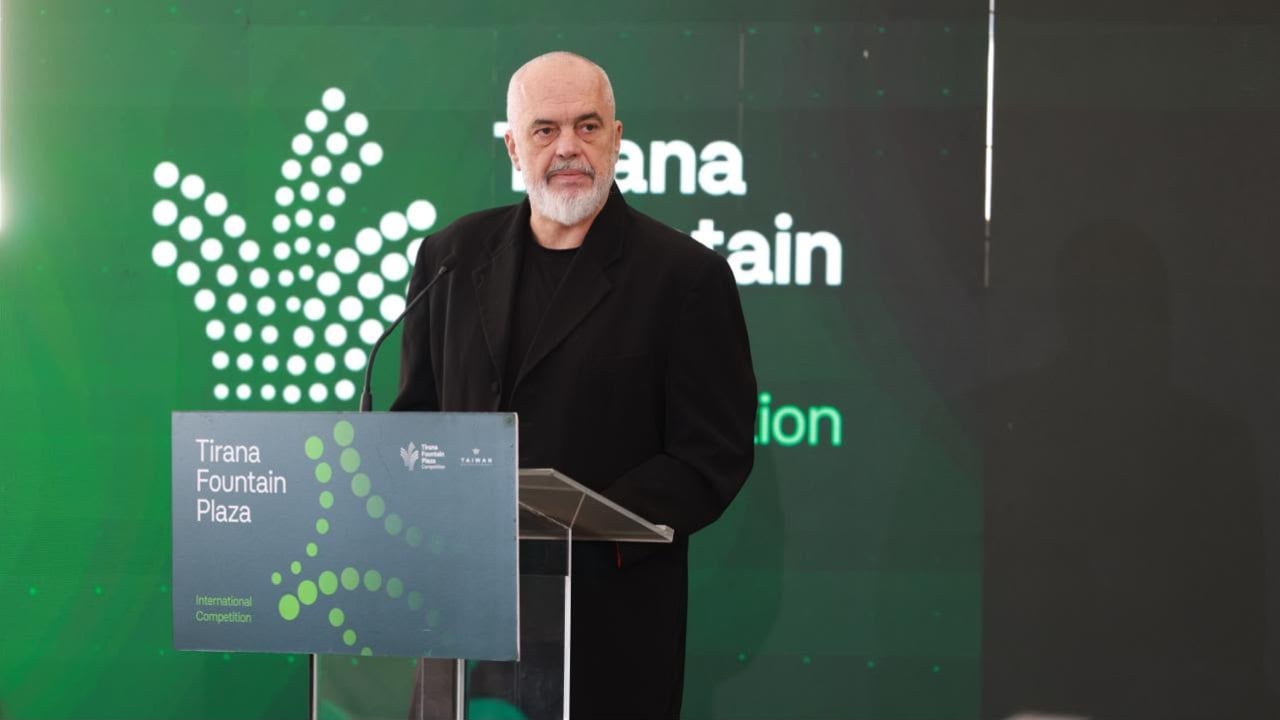
Five studios in the running for a key site in the center
According to the official presentation, the competition is linked to the “Tirana Fountain Plaza” project and aims to reconceive the property where the building known as “Taiwan” is located, inside Rinia Park. The government presents the initiative as part of Tirana’s transformation toward 2030.
At its core, this is a new development on private property, but in an area with a direct impact on one of the capital’s best-known public spaces. That is precisely where the debate begins: the line between the right to private development and the public interest in the heart of the park.
Rama: a private project, but with an impact on the whole city
In his remarks, Rama insisted that the intervention is being handled through an international competition precisely because its effect goes beyond the private plot. According to him, the existing building needs a new transformation in line with the needs and ambitions of today’s Tirana.
He argued that the choice to turn to well-known international studios is the best way to make a high-quality decision for the property and for the capital. However, the public statements did not provide a fuller explanation of the project’s specific construction parameters, the weight the structure will have in relation to the park, and how the real effects on the surrounding public space will be measured.
Clash with critics and the claim of transparency
Rama also pushed back against critical voices, including comments from media outlets and architecture critics abroad, who have raised questions about the transparency of decision-making, urban heritage, and the role of foreign architects in Albanian projects.
The official version is that the competitions are transparent and that most juries are made up of independent professionals, without direction from the Albanian side. Rama also rejected claims that Albania is allowing developments that Europe does not accept, saying the country is not doing anything outside standards or without rules.
These are claims coming from the head of government, but it remains essential that transparency be measured through public documents, clear evaluation criteria, and real access to the process, not only through political assurances from the podium.
The debate over Rinia Park and the limits of intervention
In defending the project, Rama said the area has gone through several historical transformations, from the communist era to the post-privatization phases. According to him, any new solution should also bring regeneration to the park, without affecting the presence of nature.
But this is precisely the part that requires the greatest public attention: when a new development is promoted as regeneration, citizens have the right to know exactly what is lost, what is gained, and who defines the public interest in a space like Rinia Park. So far, the government has offered more of the project’s political narrative than a full picture of its urban and environmental consequences.
Foreign architects, big ambitions, and unresolved questions
Rama presented the engagement of foreign architects as the only and best path for the country’s urban development, arguing that it also serves the professional growth of Albanian architects. He also said that Albania still does not have all the capacities for constructions of this kind, especially when it comes to towers.
The political message is clear: the government will continue with development models supported by international competitions and well-known figures in architecture. But that does not close the questions about building density in Tirana, the relationship between private interest and public space, and the real standards by which these projects are filtered before they receive the green light.
Beyond the government’s optimistic language, the “Taiwan” issue remains a clear test of how central Tirana is being reshaped: with greater weight given to investment and image, and with a public debate still demanding more facts, more documents, and less rhetoric.
In the end, the competition with five studios may produce an important architectural project, but the main question remains the same: how much of this transformation truly serves the city, and how much serves the logic of building in every space that still has public value?