
The European Union has taken a strong stance after the funeral ceremony of Ratko Mladić in Belgrade, where the former Bosnian Serb commander, convicted of genocide, war crimes and crimes against humanity, was buried with military honors. The reaction comes after initial silence and confusion from Brussels structures had opened a public debate over the toleration of a scene that directly touches the memory of the wars in the Balkans.
Von der Leyen and Costa: shocking images from Belgrade
In a joint statement published on platform X, European Commission President Ursula von der Leyen and European Council President António Costa said the images from Ratko Mladić’s funeral were shocking.
They recalled that Mladić was a convicted war criminal and responsible for genocide, war crimes and crimes against humanity. The two EU leaders also condemned the presence of senior Serbian officials at the ceremony, reading it as a glorification of a figure convicted by international justice.
The ceremony that sparked strong reactions
According to details made public, Mladić’s body, who died in The Hague at the age of 84 while serving a life sentence, was transported to Belgrade by state aircraft.
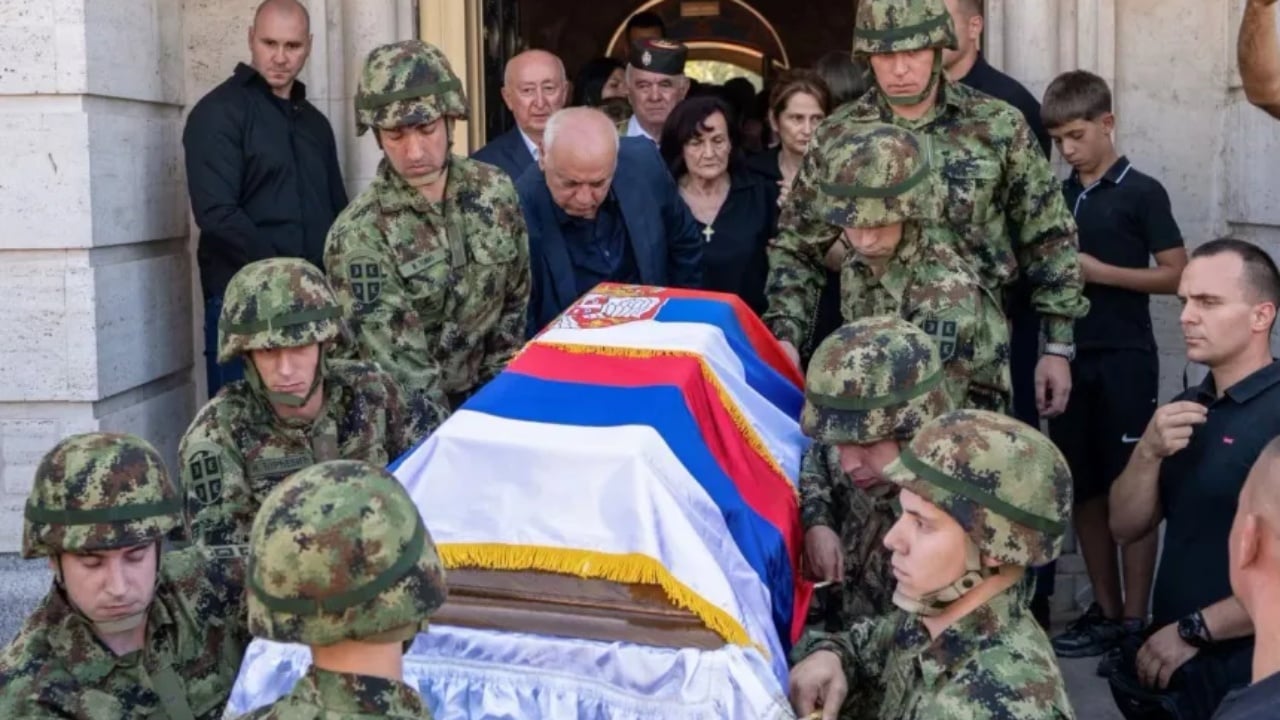
In the Serbian capital he was honored with a guard of honor by the army and other security structures. The coffin was draped in the Serbian flag, while the presence of state television and the Serbian Orthodox Church was also reported at the ceremony. These elements make it difficult to relativize the event as a simply private ceremony.
The clash after the Commission’s first statement
A day earlier, European Commission chief spokesperson Paula Pinho had said at the daily press briefing that there had been reports of a funeral with state honors, but that this had not happened.
That statement triggered sharp reactions. The Foreign Minister of Bosnia and Herzegovina called it a disgrace for the entire EU, recalling that five ministers of the Serbian government were in the front row of the ceremony, that Mladić was given military honors, and that his body was transported on an aircraft of the Serbian government.
A political signal for Serbia and the EU process
The joint statement by Von der Leyen and Costa now makes the EU’s institutional condemnation of the elevation of Mladić clearer. The political message is direct: Serbia’s failure to confront the crimes of the past runs counter to the standards required for membership in the European Union.
In this climate, Enlargement Commissioner Marta Kos had earlier also canceled her planned visit to Serbia. In parallel, on Serbia’s domestic political scene, Aleksandar Vučić has called for early parliamentary elections at the end of October. According to foreign media reports, he is considering a political move that would take him from the presidency to the post of prime minister.
The delayed but firm reaction of the EU’s two main institutions shows that the ceremony for Mladić was not seen simply as a protocol episode, but as a political test of Serbia’s relationship with the past and with Europe.
If Belgrade chooses to keep alive the symbols of a history condemned internationally, then the cost will not remain only moral, but will directly affect its path toward the EU.